Playing a revved-up mixture of punk, rockabilly, hard rock, country, and dirty boogie, New Orleans natives Dash Rip Rock are one of the most enduring acts on the Southern "cowpunk" scene, playing rowdy, sweat-soaked shows and making bold, raucous records over a quarter-century after they first took flight. Taking their name from a minor but memorable character on the TV sitcom The Beverly Hillbillies, Dash Rip Rock were founded in 1984 by guitarist and singer Bill Davis, who has been the sole constant member throughout the group's history. The initial edition of Dash Rip Rock featured Davis, Ned "Hoaky" Hickel on bass, and F. Clarke Martty on drums, and was primarily focused on rockabilly and uptempo country sounds. Within a year, Davis became eager to bring a harder and more aggressive edge to the music, and Martty left the trio, with Fred LeBlanc taking over on drums. Dash Rip Rock earned a reputation as a great energetic live act, and their steady schedule of road gigs won them a large following in New Orleans and plenty of college towns throughout the South and Southwest. Dash Rip Rock became a frequent attraction at the 688 Club in Atlanta, Georgia, and when the club's owners decided to launch a record label, Dash Rip Rock became their first signing, releasing the group's self-titled debut in 1987. The North Carolina-based independent label Mammoth Records picked up 688's distribution, and for Dash Rip Rock's 1989 album Ace of Clubs, the band moved up to Mammoth's roster. After touring behind Ace of Clubs, Fred LeBlanc left the band (he would go on to co-found the long-running country-rock band Cowboy Mouth), and drummer Chris Luckette signed on with DRR in time to record 1990's Not of This World, produced by living legend Jim Dickinson. Dash Rip Rock closed out their Mammoth Records tenure with the 1991 live set Boiled Alive, and they signed with the California-based indie Dr. Dream Records for the 1993 release Tiger Town. After jumping to the Ichiban-distributed Naked Language imprint for 1995's Get You Some of Me(which included the radio favorite "Let's Go Smoke Some Pot"), and 1996's Dash Rip Rock's Gold Record (which had some of the group's familiar audience favorites), 1998 found Fred LeBlanc making a partial return to the band as producer and sideman on the album Paydirt. (Paydirt also found the group once again breaking in a new drummer, Kyle Melancon.) For 2002's Sonic Boom, the group briefly shortened their name to Dash, as well as adding a bit of polish to their sound, but with the 2005 collection Recyclone, Dash Rip Rock offered a potent look back at the cream of their back catalog while also teaming up with an unlikely but supportive record label, Alternative Tentacles, run by former Dead Kennedys' vocalist Jello Biafra. While in the 2000s Dash Rip Rock went through an impressive number of drummers and bass players after both Hickel and Melancon moved on, the association with Alternative Tentacles led to a series of strong and lively albums, including the tongue-in-cheek concept album Hee Haw Hell (2007), the party-hearty celebration Call of the Wild (2010), and the dark, harder-edged Black Liquor (2012), which helped rekindle interest in the band, who still play upwards of 150 shows a year. In 2012, Dash Rip Rock were inducted into the Louisiana Music Hall of Fame, and the group also has the distinction of being the only band to have played the South by Southwest Music Conference every year since it was launched in 1986. AMG.
listen here
sábado, 5 de novembro de 2016
Wallace Roney - Mystikal 2005
Upon first listen to trumpeter Wallace Roney's Mystikal one might be inclined to marginalize it as yet another attempt to re-create '70s-era Miles Davis. This would be a mistake. While Roney has always owed a large debt to the iconic jazz innovator -- he even played with Davis on a concert released as Miles & Quincy Live at Montreux -- Mystikal is a modern album made up of vintage parts. Which is to say that while Roney has deep affection for the sounds of '60s jazz and '70s funk and fusion, he is a resolutely forward-thinking musician who borrows from a variety of sources and time periods even when the overall sound is funky. Featuring his longtime working band including pianist Geri Allen, brother saxophonist Antoine Roney, keyboardist Adam Holzman, bassist Matt Garrison, drummer Eric Allen, percussionist Bobby Thomas, Jr., and turntablist Val Jeanty, Roney has largely crafted a sister album to 2004's similarly minded Prototype. Like that album, Mystikal is in many ways a standard jazz album with some original compositions, a cover of a standard, and a lesser known piece by a well-known artist. This time around that artist is Wayne Shorter, whose "Atlantis" kicks off the album. An expansive and creepily funky piece off Shorter's underrated 1985 album of the same name, Roneyturns the song into a moody mix of Miles in the Sky-esque post-bop, '80s hip-hop, and new age atmospherics. Similarly engaging is his melancholy cover of the Temptations classic "Just My Imagination," which draws out the deeper, more sanguine harmonics of the song even while it perfectly embodies the innocent romance of the original. Interestingly, Roney makes room for some straight-ahead but no less adventurous stuff here covering trumpeter Kenny Dorham's jaunty "Poetic" as well as ending with pianist Bud Powell's gorgeous ballad "I'll Keep Loving You." Roney's own compositions do not disappoint either with the hard funk of "Stargaze" and the elegiac "Baby's Breath" displaying the trumpeter's deft creative vision. AMG.
listen here
listen here
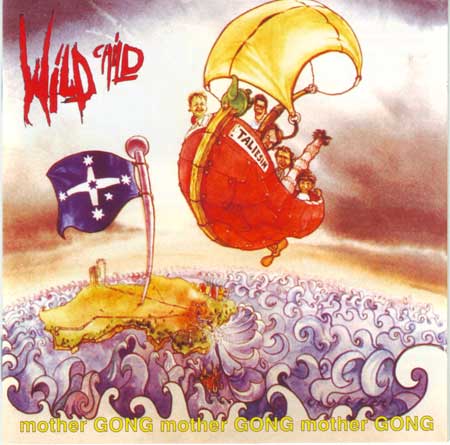
Mother Gong - Wild Child 1989
Recorded in Wales on the eve of Mother Gong's 1989 British tour, Wild Child was the result of what Gilli Smyth termed "spontaneous composition" -- she would enter the studio poem in hand, discuss the feel and limits of the piece with the musicians, and then turn on the tapes. There were no rehearsals and no retakes -- which explains how an album of such apparent complexity was recorded in just a few days. There are moments when a little guidance might have been handy -- saxophonist Robert Calvertmight well strike the listener as being a little overbearing in places, while both Rob George and Conrad Henderson have their moments of mayhem too. But the opening "Today Is Beautiful" is archetypal Mother Gong, all gradual space whisper and gentle splinters of sound, even as they build toward a portentous peak that in turn drifts into space funk. Elsewhere, "Time" toys with a toe-tapping rhythm, while "Augment" follows the bandmembers' jazz-funk inclinations through the opening instrumental, before Smyth's "Lady" hisses over the merest ghost of a tune. Across the board, then, Wild Child leads your expectations on the merriest of dances, to create what is probably the band's finest album since Fairytales. AMG.
listen here
listen here
Lan Xang - Hidden Gardens 1999
Named after a 14th-century Laotian/Mekong Valley kingdom, this quartet of younger improvisers do not so much base their music on Asian themes, though they do crop up here and there. The composed and improvised music is thoroughly modern, rich, and accessible, and made tuneful by saxophonists Donny McCaslin (tenor/soprano) and Dave Binney (alto). Bassist Scott Colley and drummer Kenny Wolleson provide the rhythmic landscapes and frameworks on which the saxes paint figures of drama, color, passion, and stark realism. Binney wrote perhaps the most potent pieces. Electronic landscape textures intro and outro "The Restless Many" with beautiful, sad dual alto/tenor sax crying out in the middle. A pure bluesy, soulful, loping horn line informs the outstanding "Free to Dream," which builds to good intensity without completely erupting. McCaslin's flute leads the meditational snippet "Incurable Dreaminess." As a composer, McCaslin really asserts himself with Lan Xang. His alternately supercharged and staggered boppish chart for "Trinity Place" leads to free dissonance. Heavy, hip, highly arranged, and funky is "Mode Four," while a cleverly constructed and tricky 12/8 (or three repeated measures of 4/4) services the funky and intense title cut. A cerebral "Parting...From a View" sports toned-down, late-night sounds. Colley contributes two selections: "Segues" is a nine-note unison setup in bop mode replete with psychotrophic sampled voices and crackling percussion, and "Gradual Impulse" is a bass/drum extended funk. There's also a continuation of the "Xang" concerto with segments six through 11, ranging from McCaslin's Asian-flavored flute with percussion and desert wind sounds to bird fluttered trilling, insistent bus horn honking to tense free chaos, scatter shot improv, and an obvious space-probe piece. The creative juices of Lan Xang collectively flow from start to finish on this continually intriguing, cliché-free recording. Highly recommended for progressive music listeners. AMG.
listen here
listen here
Dazaranha - Paralisa 2007
Dazaranha (also known simply as Daza) is a Brazilian rock band, formed in Florianópolis in the late 1990s. Its members are Adauto (bass), Chico Martins (lead guitar and vocals), Fernando (violin and backing vocalist), Gazu (lead vocals), Gerry (percussion), Moriel (rhythm guitar and backing vocalist). The band combined reggae and rock, with strong participation arrangements violin.
listen here
listen here
Carey & Lurrie Bell - Son Of A Gun 1984
Lurrie and his dear old dad democratically split the vocals and most of the solo space on this LP to generally winning effect. Nothing overly polished or endlessly rehearsed; just solid mainstream Chicago blues. AMG.
listen here
listen here
quinta-feira, 3 de novembro de 2016
The Del Fuegos - The Longest Day 1984
The Del Fuegos were proud sons of Boston, Massachusetts, but you might not have guessed that by listening to their debut album, The Longest Day, which mixed the swaggering thunder of heartland garage rock with the rootsy twang of Dixie-fried rockabilly and roots-conscious rock 'n' roll. While the band would later claim that producer Mitchell Froom slicked back their sound considerably from that of their raucous club shows, which earned them their hometown reputation, the results actually capture the band's swing and stomp without an excess of sonic affectation (something that would later become Froom's hallmark), reveling in the crack of Brent "Woody" Giessmann's drums, and the bark of Danand Warren Zanes' guitars. And if Dan and Warren's songs didn't exactly stretch the boundaries of early rock archetypes, they honored the traditions in the best ways -- by playing roots rock with sweat, fire, good humor, and a lot of heart and soul. And you just can't argue the genius of this line from "When The News Is On": "And sometimes love is a lot like a shoe/ You run around too much and it'll fall apart." The Longest Day isn't the sort of album likely to change the way you look at rock and roll, but it will probably remind you why you love the stuff, and that's more than enough reason to slap it into your stereo and turn it up. AMG.
listen here
listen here
Gilberto Gil - Luar (A Gente Precisa Ver O Luar) 1981
After the hard years dominated by social convulsion in Brazil, in which it was demanded that every artist explicate his political views, the end of dictatorship brought an uncommitted inebriating feel of liberty that was translated into music by Caetano Veloso's "Odara" (where all the composer wanted to do was to dance) to the horror of political activists. This is the Gilberto Gil version of those days. One of his most danceable albums, most songs make it clear that no further considerations are taken into account, just plain Saturday night entertainment. Songs like "Luar," "Palco," "Sonho Molhado" (whose biggest virtue is the use of accordion and other northeastern touches), "Lente do Amor" (with a subtle reference to sexual freedom, which also coincides with Fernando Gabeira's loincloth, from around the same period), "Morena," "Cara Cara" (a frevo by Caetano Veloso interpreted as dance music), the beautiful "Cores Vivas," and "Axé Babá" (with its heavy Afro-Bahian percussion) all have in common the desire for pleasure and the avoidance of deeper questions. The last two songs break this uniformity, though: "Flora" is a delicate bossa with a beautiful melody in Gil's style, in which a melodic sequence is transposed in ascendant manner, and "Se Eu Quiser Falar com Deus" ("If I Want to Talk with God"), a deeply heartfelt slow song where Gil dialogues with his own relationship with religion. The album had several hits ("Palco," "Lente do Amor" -- which was included in a TV series -- "Axé Babá," and "Se Eu Quiser Falar com Deus"), representing a document of a period, and having at least two melodically/lyrically highly expressive songs. AMG.
listen here
listen here
Freddy Fender - La Musica De Baldemar Huerta 2002
La Musica de Baldemar Huerta is comprised mostly of Mexican and South American songs that Fender heard while growing up in Texas, sung in Spanish, though there are English-language remakes of his hits "Before the Next Teardrop Falls" and "Secret Love." While this is too unassuming to count as a major career milepost, it's refreshingly basic in production and sincere in execution. The arrangements are low-key and acoustic-oriented, and though some sweeping strings are employed, they're pretty graceful and tasteful. It's optimum background music for romantic candlelit dinners in the Southwest; in the better sense of that description, it's romantic, but not unduly schmaltzy. AMG.
listen here
listen here
Gilli Smyth & Daevid Allen - Short Tales & Tall 2006
Gillian "Gilli" Mary Smyth[1] (1 June 1933 – 22 August 2016) was an English musician who performed with the bands Gong, Mother Gong, and Planet Gong and released several solo albums and albums in collaboration with other members of Gong.[2] In Gong, she often performed under the name Shakti Yoni, contributing poems and "space whispers".
Smyth had three degrees from King's College London,[citation needed] (the liner notes for Voiceprint's 'Mother Gong' CD suggests 'London University') where she gained notoriety as the outspoken sub-editor of "Kings News", a college magazine. After a brief spell teaching at the Sorbonne (Paris) (where she became bilingual), she began doing performance poetry with well-known English jazz-rock group Soft Machine, founded by her partner and long-time collaborator, Daevid Allen, in 1968.
She co-founded Gong with Allen, an outfit that included musicians such as Steve Hillage, Pierre Moerlen and Didier Malherbe. All of the songs on the albums Magick Brother and Continental Circus are listed as written or co-written by her. In her spoken-word poetry, especially within Gong's "Radio Gnome Invisible" Trilogy, she portrays a prostitute, a cat, a mother, a witch, and an old woman, and she has been known for wearing such costumes on stage. This became part of the cult mythology, which was written into sixteen albums that were produced. Gong developed into a family of bands, including Gongmaison and Mother Gong. Mother, her 1978 solo album, led to Smyth founding Mother Gong having left the original Gong band in 1975 to have children.[citation needed]
Mother Gong toured internationally in 1979-81 and 1989–91, either headlining or supporting such artists as Bob Dylan and Big Brother and the Holding Company. Smyth appeared as a solo performer and lecturer at the Starwood Festival from 1992-93. She did voice-overs for commercials, taped children's books and other books and poetry, given workshops on voice projection and voice as a confidence raiser, and has performed for many women's groups.
"Short Tales and Tall" sees Gilli and Daevid working together once again. The recordings were made in late '04 through to early '05 and are amore than a spoken word album containing as it does samples of music and sounds from a range of Gong related albums.
listen here
Smyth had three degrees from King's College London,[citation needed] (the liner notes for Voiceprint's 'Mother Gong' CD suggests 'London University') where she gained notoriety as the outspoken sub-editor of "Kings News", a college magazine. After a brief spell teaching at the Sorbonne (Paris) (where she became bilingual), she began doing performance poetry with well-known English jazz-rock group Soft Machine, founded by her partner and long-time collaborator, Daevid Allen, in 1968.
She co-founded Gong with Allen, an outfit that included musicians such as Steve Hillage, Pierre Moerlen and Didier Malherbe. All of the songs on the albums Magick Brother and Continental Circus are listed as written or co-written by her. In her spoken-word poetry, especially within Gong's "Radio Gnome Invisible" Trilogy, she portrays a prostitute, a cat, a mother, a witch, and an old woman, and she has been known for wearing such costumes on stage. This became part of the cult mythology, which was written into sixteen albums that were produced. Gong developed into a family of bands, including Gongmaison and Mother Gong. Mother, her 1978 solo album, led to Smyth founding Mother Gong having left the original Gong band in 1975 to have children.[citation needed]
Mother Gong toured internationally in 1979-81 and 1989–91, either headlining or supporting such artists as Bob Dylan and Big Brother and the Holding Company. Smyth appeared as a solo performer and lecturer at the Starwood Festival from 1992-93. She did voice-overs for commercials, taped children's books and other books and poetry, given workshops on voice projection and voice as a confidence raiser, and has performed for many women's groups.
"Short Tales and Tall" sees Gilli and Daevid working together once again. The recordings were made in late '04 through to early '05 and are amore than a spoken word album containing as it does samples of music and sounds from a range of Gong related albums.
listen here
Donny McCaslin - Fast Future 2015
Saxophonist Donny McCaslin’s 11th release as leader, and fourth on Dave Douglas’ independent imprint Greenleaf, is well-named. Fast Future explores a newer kind of fusion, blending post-bop with breakbeats, rhythms and tones from electronica and EDM. McCaslin is known for bending apart expectations, so it’s no surprise to hear thoroughly modern music on these ten tunes (eight written or co-composed by McCaslin). Fast Future reprises McCaslin’s structure from his 2012 record, Casting for Gravity, and also utilizes the same personnel: McCaslin on tenor sax; keyboardist Jason Lindner (electric and acoustic piano; synth); electric bassist Tim Lefebvre and drummer Mark Guiliana. Another element which McCaslin returns to on Fast Future is intriguing covers of electronica songs. On Casting for Gravity, McCaslin effectively re-did an Aphex Twin cut, and here he sets his interpretive skills to another Aphex Twin tune, the brief and frantic “54 Cymru Beats,” which is like a mutated, free-jazz deviation. More beats are twisted on “No Eyes,” which is by Baths (the alter-ego of electronica musician Will Wiesenfeld). This edgy piece moves in several directions, from a fusion-rimmed opening; to copious horn action and Binney’s wordless melodies; to an ambient mid-section which courses with quietly simmering synth, breathy tenor sax noises, and progressive production techniques. “Underground City” is suffused with an electronic-sounding beat, created by Guiliana as he layers a vigorous rhythm and beat which goes beyond typical jazz and into drumming which is suggestive of machine-made percussion. Reggae and dub saturate “Squeeze Thru.” McCaslin and his band head into ballad territory on the plush “Midnight Light,” which has a late-evening vibe replete with beautiful, high tenor sax notes. Another melodic number is “Love What Is Mortal,” which includes evocative tenor sax, an agile groove, and an unexpected spoken-word segment. Fast Future is quite an experience. It has a malleable, nearly non-jazz tonality which is different than the norm, but wholly fits McCaslin’s aesthetic. AMG.
listen here
listen here
Eleven Hundred Springs - This Crazy Life 2010
With This Crazy Life, Texas territory band Eleven Hundred Springs is 12 years and seven albums into its career as a successful regional act, playing a varied brand of country music to the delight of fans in and around its home base of Dallas. In those dozen years, there have been many personnel changes, but the band remains a vehicle for the singing, songwriting, and guitar playing of Matt Hillyer, and Steven Berg remains the bassist. (Steel guitarist Danny Crelin, fiddler Jordan Hendrix, and drummer Brian Ferguson complete the unit.) Hillyer has a twangy tenor voice that is similar to, but less adenoidal than Jimmie Dale Gilmore's, and he writes sturdy country songs on familiar topics and in familiar styles. The title song leads things off, and it's a statement of purpose directed to a wife left at home with the kids from her musician husband on the road, claiming, unconvincingly, that one of these days he's going to give it all up and come home. "Great American Trainwreck" elaborates on this stance, adding in the usual substance abuse problems. Hillyer often paints a portrait of the singer as a loser, particularly in the waltz "The OG Blues," in which "OG" might not stand for "original gangster" in the rap sense, but rather, perhaps, just "old guy." As the album goes on, however, Hillyer's narrator becomes more comfortable, particularly when he turns to Western Swing styles on the ballad "I'm in a Mellow Mood" and the two-step "Some Things Don't Go Together." Maybe it just takes him a while to get going since, by the end, in the rocking Cajun tune "Straight to Bed," he sounds ready for some amorous action. This Crazy Life provides several songs to add to the repertoire of a working band that may never get out of Texas, but that will please its many local fans. Texas is a big state, after all. AMG.
listen here
listen here
The Raconteurs - Broken Boy Soldiers 2006
It's hard to call the Raconteurs a genuine supergroup since there's only one true rock star in the quartet: the White Stripes' eccentric mastermind Jack White. Sometime between the recording of the Stripes' 2003 breakthrough Elephant and its willfully difficult 2005 follow-up, Get Behind Me Satan, White teamed up with fellow Detroit singer/songwriter Brendan Benson to write some tunes, eventually drafting the rhythm section of Cincinnati garage rockers the Greenhornes as support. Lasting just ten tracks, their debut, Broken Boy Soldiers, doesn't feel hasty, but it doesn't exactly feel carefully considered, either. It sounds exactly as what it is: a busman's holiday for two prodigiously gifted pop songwriters where they get to indulge in temptations that their regular gig doesn't afford. For Benson, he gets to rock harder than he does on his meticulously crafted solo albums; for White, he gets to shed the self-imposed restrictions of the White Stripes and delve into the psychedelic art pop he's hinted at on Elephant and Satan. Both Benson and White are indebted to '60s guitar pop, particularly the pop experiments of the mid-'60s -- in its deliberately dark blues-rock, Elephant resembled a modern-day variation of the Stones' Aftermath, while Benson has drawn deeply from Rubber Soul and Revolver, not to mention the Kinks or any number of other '60s pop acts -- so they make good, even natural, collaborators, with Brendan's classicist tendencies nicely balancing Jack's gleeful freak-outs.
Appropriately, Broken Boy Soldiers does sound like the work of a band, with traded lead vocals and layers of harmonies, and no deliberate emphasis on one singer over the other. Even if there's a seemingly conscious effort to give Brendan Benson and Jack White equal space on this brief album, White can't help but overshadow his partner: as good as Benson is, White's a far more dynamic, innovative, and compelling presence -- there's a reason why he's a star. But he does willingly embrace the teamwork of a band here, dressing up Benson's songs with weird flourishes, and playing some great guitar along the way. If the Raconteurs don't rock nearly as hard as the White Stripes -- there's a reckless freedom in Jack's careening performances when he's supported only by Meg White -- they do have some subtle sonic textures that the Stripes lack, and a tougher backbone than Benson's albums, which makes them their own distinctive entity. And they're a band that has their own identity -- it may be somewhat stuck in the '60s, but they're not monochromatic, showcasing instead a variety of sounds, ranging from sparely ominous single "Steady, as She Goes" and the propulsive pop of "Hands" to the churning Eastern psychedelia of "Intimate Secretary" and the grandiose menace of the title track to the slow blues burn of "Blue Veins." These songs, and the five other cuts on this album, prove that the Raconteurs are nothing less than a first-rate power pop band -- but they're nothing more, either. They may not rewrite the rules of pop on Broken Boy Soldiers, but they don't try to: they simply lie back and deliver ten good, colorful pop songs, so classic in style and concise in form that the album itself is barely over in 30 minutes. It's brief and even a little slight, but it's almost as much fun to listen to as it must have been to make. AMG.
listen here
Appropriately, Broken Boy Soldiers does sound like the work of a band, with traded lead vocals and layers of harmonies, and no deliberate emphasis on one singer over the other. Even if there's a seemingly conscious effort to give Brendan Benson and Jack White equal space on this brief album, White can't help but overshadow his partner: as good as Benson is, White's a far more dynamic, innovative, and compelling presence -- there's a reason why he's a star. But he does willingly embrace the teamwork of a band here, dressing up Benson's songs with weird flourishes, and playing some great guitar along the way. If the Raconteurs don't rock nearly as hard as the White Stripes -- there's a reckless freedom in Jack's careening performances when he's supported only by Meg White -- they do have some subtle sonic textures that the Stripes lack, and a tougher backbone than Benson's albums, which makes them their own distinctive entity. And they're a band that has their own identity -- it may be somewhat stuck in the '60s, but they're not monochromatic, showcasing instead a variety of sounds, ranging from sparely ominous single "Steady, as She Goes" and the propulsive pop of "Hands" to the churning Eastern psychedelia of "Intimate Secretary" and the grandiose menace of the title track to the slow blues burn of "Blue Veins." These songs, and the five other cuts on this album, prove that the Raconteurs are nothing less than a first-rate power pop band -- but they're nothing more, either. They may not rewrite the rules of pop on Broken Boy Soldiers, but they don't try to: they simply lie back and deliver ten good, colorful pop songs, so classic in style and concise in form that the album itself is barely over in 30 minutes. It's brief and even a little slight, but it's almost as much fun to listen to as it must have been to make. AMG.
listen here
The Pharaohs - In The Basement 1996
The Pharaohs only managed one release during their short lifetime, 1971's masterful Awakening. But when the San Francisco-based jazz-funk reissue label Luv N Haight reissued Awakening in 1996, they also came out with a brand-new CD of mostly previously unreleased material called In the Basement. Most of this album was recorded live in 1972, after the already enormous 11-piece band had grown to include four more players, including a sixth drummer. The live tracks are fascinating, because where Awakening sounds like an earthier and more Afrocentric version of Earth, Wind & Fire (which several members of the Pharaohs would go on to found in 1973), the much loopier and more jazz-oriented tracks here sound more like Sun Ra jamming with the P-Funk All Stars. The 11-minute take on the Stylistics' "People Make the World Go Round" is absolutely indescribable, a mix of otherworldly horns and psychedelic guitars over a non-stop African-style groove. Other highlights include the all-rhythm "Drum Suite," a hypnotic blend of organic polyrhythms and chanting, and a stunning cover of Al Green's "Love and Happiness" that's the only studio track here. Not quite as wonderful as Awakening, In the Basement nonetheless makes one wish that the Pharaohs had lasted longer, just to see what would have happened next. AMG.
listen here
listen here
terça-feira, 20 de setembro de 2016
Amon Düül - Airs On A Shoe String 1986
Even with only five tracks, Airs on a Shoestring is one of the best avenues to investigate Amon Düül's sometimes irritable, sometimes unlistenable brand of fragmented rock and jazz fusion. Two of the tracks, "Hymn for the Hardcore" and the humorous "Olaf (Where's My $20,000?)" represent the band's musical sloppiness the best, but, at the same time, offer a foreshadowing into Amon Düül II's Krautrock prominence. The jams are unraveled and fountain-like, while the guitar rhythms are half-built, melding into the thrashing of the drums and cymbals. The lyrics, often indecipherable, are drowned out by clashes of percussion and the splattering of guitar improvisation anyway, but there is still some positive energy felt within the rawness of the music. Airs on a Shoestring may be brief, but this, in itself, is welcoming, and it's much easier to find than most of their albums. AMG.
listen here
listen here
Subscrever:
Mensagens (Atom)