domingo, 16 de setembro de 2012

Albert Lee - Heartbreak Hill 2003

Albert Lee has garnered such a good command of American country music it will probably surprise a few listeners that he was born in England. On Heartbreak Hill, he delves into a number of songs associated with Gram ParsonsRodney Crowell, and former bandmate Emmylou HarrisLee has a well-deserved rep for his guitar skills, so it makes good sense that he's joined by a top-notch band that includes veteran steel player Buddy Emmons. The band opens strong with the jaunty title cut before sliding into Paul Kennerley's heartbreaking "Heaven Only Knows." Lee's joined on vocals by Patty Loveless on the first cut and Buddy Miller on the latter, adding extra pizzazz to the choruses. The arrangements -- steel, piano, drums, and bass -- achieve a good blend behind the vocals, while Lee's multiple guitar parts add subtle touches in unexpected places. Other enjoyable cuts include Townes Van Zandt's "If I Needed You,"Kennerley's "Born to Run," and -- for guitar fans -- an instrumental take on Parsons' "Luxury Liner."Heartbreak Hill never overwhelms the listener with its originality, at least partially because it is so grounded in music associated with other people. But Lee and his bandmates have crafted a solid and likable album that lovingly recalls the best of '70s and '80s country. AMG.

listen here

Buy @ Amazon: USA - FRANCE - UK

Roxy Music - Flesh and Blood 1980

An even slicker record than ManifestoFlesh + Blood precariously balances between alluringly seductive, sophisticated soul-pop and cloying, radio-ready disco-pop. At its best, the album is effortlessly suave and charming -- "Over You" is one of their greatest singles, and "Oh Yeah" is nearly as persuasive -- but much of the record is devoted to ill-formed, stylish lounge-pop. In particular, the reliance on reworked covers of "In the Midnight Hour" and "Eight Miles High" is distressing, not only because it signals a lack of imagination, but also because it suggests that Flesh + Blood is simply a lesser solo effort from Bryan Ferry. And even the handful of undeniably strong moments can't erase the feeling that Roxy Music were beginning to run out of ideas. AMG.

listen here

Buy @ Amazon: USA - FRANCE - UK

Paula Cole - Courage 2007

Once ubiquitous, as her "Where Have All the Cowboys Gone" was a staple on adult alternative radio and "I Don't Wanna Wait" served as the soundtrack to turn of the millennium teen soap Dawson's Creek,Paula Cole suddenly disappeared after her third album, Amen, failed to live up to the commercial expectations set by her 1996 breakthrough, This Fire. Throughout the 2000s she stayed quiet, raising her newborn daughter as she worked toward reviving her muse, eventually resurfacing in 2007 -- a decade after the peak of her popularity -- with Courage, her first album for Decca and her first album in eight years. Immediately, it's apparent that this is worlds away from the stylized worldbeat and vague electronica leanings of Amen, never sounding as self-consciously restless as that album. Not that Colehas abandoned her refined eclecticism -- she dabbles in gentle bossa nova beats on "Hard to Be Soft," duetting with Brazilian singer Ivan Lins -- but never once does Cole sound as strained in incorporating hip-hop beats and electronic textures as she did on Amen. Instead, she sounds relaxed as she eases into a subdued collection of songs jazzy enough to justify Herbie Hancock's cameo on "Lonely Town." Such casual sophistication reigns here, but Courage doesn't sound like a clean break from her past, or a contrived attempt to refashion herself for Norah Jones' audience; the opening "Comin' Down" and thePatrick Leonard collaboration "14" sound like This Fire, only a little more settled yet managing to sidestep slickness while emphasizing her gentle, insinuating melodies. While Courage may stray into sleepiness on the ballads, it nevertheless always flows naturally even at its slowest moments and that comfortable feel is the most appealing thing about the record, since it's evident in the unhurried songs and the unstrained performances. It may be low-key, but Courage certainly qualifies as a successful comeback from a singer/songwriter who had seemed lost to the Lilith Fair era. AMG.

listen here

Buy @ Amazon: USA - FRANCE - UK

The White Stripes - Icky Thump 2007


A lot changed in the White Stripes' world between Get Behind Me Satan and Icky ThumpMeg Whitemoved to L.A., while Jack White left Detroit for Nashville, married and had a daughter, and formed the Raconteurs, a side project that won so much praise that some fans worried that it meant the end of the Stripes. Those fears were as unfounded as the speculation that White's new hometown meant that the band was going to "go country" (after all, Jack and Meg are wearing the costumes of London's Pearly Kings and Queens, not Nudie suits, on Icky Thump's cover). Though it was recorded at Nashville's state-of-the-art Blackbird Studio and covers everything from bagpipes to metal, Icky Thump is unmistakably aWhite Stripes album. The eclectic feel of Get Behind Me Satan remains, but is less obvious; interestingly, out of all the band's previous work, Icky Thump's brash and confessional songs most closely resemble De Stijl. "300 MPH Torrential Outpour Blues"' acoustic blues and carefully crafted wordplay hark back to "Sister, Do You Know My Name." Meanwhile, "Rag & Bone" is a cute, ragamuffin cousin of "Let's Build a Home" that casts Jack and Meg as enterprising garbage-pickers; the sly grin in Jack's voice as he says "we'll give it a...home" is palpable. And, while Get Behind Me Satan was heavy on pianos, Icky Thump is just plain heavy, dominated by primal, stomping rock that feels like it's been caged for a very long time and is just now being released. Jack White's guitars are back in a big way; "Catch Hell Blues" is a particularly fine showcase for his playing. Once again, though, the Stripes defy expectations, and their "return to rock" isn't necessarily a return to the kind of rock they mastered on Elephant.
Aside from the searing "Bone Broke," which would fit on almost any White Stripes album (and in fact was partially written in 1998), on Icky Thump Jack and Meg push the boundaries of their louder side. Darker and slower than most Stripes singles, "Icky Thump" is their very own "Immigrant Song," with guitars that chug menacingly and lyrics that run the gamut from fever dream meditations on redhead senoritas to pointed political statements ("Why don't you kick yourself out/You're an immigrant too"). "Little Cream Soda" is also outstanding, pairing ranting, spoken-word verses with grinding surf-metal guitars that make it one of the Stripes' heaviest songs. However, the boldest excursion might be "Conquest," which turns Patti Page's '50s-era battle of the sexes into a garage rock bullfight, complete with dramatic mariachi brass, flamenco rhythms, backing vocals that would do Ennio Morricone proud, and dueling guitar and trumpet solos that capture the band's love of drama. As fantastic as Icky Thump's rockers are, its breathers are just as important. Though the Celtic detour that makes up Thump's heart feels out of place initially, "Prickly Thorn, But Sweetly Worn" is indeed a sweet and genuine sounding homage to Scottish folk, bagpipes and all (and could also be a nod to the Rolling Stones' flirtation with British folk in the mid-'60s). And while its psychedelic counterpart "St. Andrews (This Battle Is in the Air)" doesn't work quite as well, it feels like the kind of quirky tangent that pops up on plenty of vintage albums as a palate cleanser. the Stripes' poppy and vulnerable sides get slightly short shrift on Icky Thump. "You Don't Know What Love Is" is so hooky it could just as easily be a Raconteurs song, though it boasts a guitar solo that stings like lemon juice in a paper cut. "I'm a Martyr for My Love for You" is the album's lone ballad, and while its melody is beautiful, it may be the album's weakest track. And though Icky Thump's track listing might be slightly front-loaded, the Stripes uphold their tradition of ending their albums on a playful note with the wonderful "Effect and Cause," which feels equally indebted to hillbilly wisdom and Mungo Jerry's sly jug-band shuffle. With its fuller sound and relaxed flights of fancy, Icky Thump is a mature, but far from stodgy, album -- and, as is usually the case, it's just great fun to hear the band play. AMG. 

listen here

Buy @ Amazon: USA - FRANCE - UK

Frank Zappa - Francesco Zappa 1984

This is chamber music written by an 18th century Italian composer who may or may not have been an ancestor of Frank Zappa. The younger Zappa discovered the music at the music library at the University of California at Berkeley and programmed it into his Synclavier. The result is pleasant-enough European classical music with an electronic twinge -- in the same category as Switched-On Bach. AMG.

listen here

Buy @ Amazon: USA - FRANCE - UK

Jeff Healey Band - Feel This 1992

Third time up for sightless guitar wunderkid Jeff Healey and gang; Feel This offers the power trio's meatiest and most satisfying outing. JHB's brand of roadhouse rock can be somewhat bland on disc; here the group captures much more of its trademark live intensity than in the past. The unobtrusive addition of keyboards adds a more expansive dimension to several tracks. Boogie fans will want to check out theZZ Top-like "Cruel Little Number"; blues-rockers will come away satisfied with the likes of "House That Love Built." Hip-hop connoisseurs, on the other hand, will likely want to avoid JHB's rap spoof on "If You Can't Feel Anything Else." AMG.

listen here

Buy @ Amazon: USA - FRANCE - UK

Archive - With Us Untill You're Dead 2012

The trip-hop project Archive was formed by Darius Keeler and Danny Griffiths, who originally met in 1990. The pair released a few singles on their own Swam label, worked with Genaside II, and formed Archive in 1994. Signed to Island, Keeler and Griffiths released their debut,Londinium, in 1997. After splitting briefly, the two re-formed and released their second album, Take My Head, on Independiente in 1999. AMG.

listen here

segunda-feira, 10 de setembro de 2012

Lou Reed - New York 1989

New York City figured so prominently in Lou Reed's music for so long that it's surprising it took him until 1989 to make an album simply called New York, a set of 14 scenes and sketches that represents the strongest, best-realized set of songs of Reed's solo career. While Reed's 1982 comeback, The Blue Mask, sometimes found him reaching for effects, New York's accumulated details and deft caricatures hit bull's-eye after bull's-eye for 57 minutes, and do so with an easy stride and striking lyrical facility. New Yorkalso found Reed writing about the larger world rather than personal concerns for a change, and in the beautiful, decaying heart of New York City, he found plenty to talk about -- the devastating impact of AIDS in "Halloween Parade," the vicious circle of child abuse "Endless Cycle," the plight of the homeless in "Xmas in February" -- and even on the songs where he pointedly mounts a soapbox, Reed does so with an intelligence and smart-assed wit that makes him sound opinionated rather than preachy -- like a New Yorker. And when Reed does look into his own life, it's with humor and perception; "Beginning of a Great Adventure" is a hilarious meditation on the possibilities of parenthood, and "Dime Store Mystery" is a moving elegy to his former patron Andy WarholReed also unveiled a new band on this set, and while guitarist Mike Rathke didn't challenge Reed the way Robert Quine did, Reed wasn't needing much prodding to play at the peak of his form, and Ron Wasserman proved Reed's superb taste in bass players had not failed him. Produced with subtle intelligence and a minimum of flash, New York is a masterpiece of literate, adult rock & roll, and the finest album of Reed's solo career. AMG.

listen here

Buy @ Amazon: USA - FRANCE - UK

Frankie Miller - Easy Money 1980

This time out Scotsman Frankie Miller finds himself in Nashville playing with some of the finest sidemen that city has. But, despite the location, Frankie turns in another fine album of R&B material. Much of the material is original but the covers he chooses are interesting, including one from Australia's Jojo Zep. Also of note: 4 years later, The Bellamy Brothers hit the country chart with Frankie's composition "Forget About Me." AMG.

listen here

Buy @ Amazon: USA - FRANCE - UK

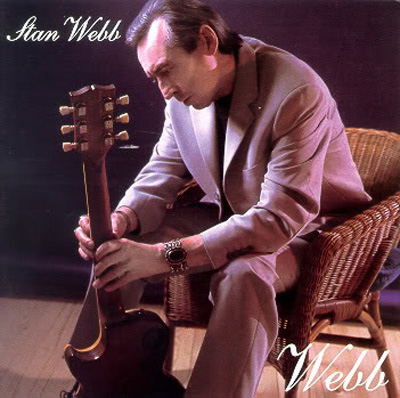
Stan Webb - Webb 2001

The ex-Chicken Shack lead guitarist was still at it more than 30 years after his commercial peak, with this 2001 set representing his first studio album in some time. If Webb was American, it would be easy to imagine him getting picked up by a subsidiary of the Rounder label, such as Bullseye Blues or Blacktop. He's got that same skilled, bar-band blues-with-a-touch-of-rock vibe. He still plays well, but (as it happens, like many a Bullseye Blues and Blacktop artist), his vocals lag way behind his guitar skills. It's capably executed, moody urban blues for the most part, with some brass provided by the Third Coast Horns. This is a step ahead of many similar journeyman blues albums in that most of the material is original (written by Webb with second guitarist Fred James), and in that Webb's vocals, while not very powerful, are more affable than those of many such performers. Given Webb's vocal limitations, it's unsurprising that the best track is the instrumental "Misty Rivers," where his sliding, sustaining guitar work is at its most echoed and spooky. As for the most oddball selection, it's certainly the one cover, ofthe Beatles' "She Loves You," which is given such a radical mid-tempo bar-band rearrangement that casual listeners might not even recognize the song. AMG.

listen here

Buy @ Amazon: USA - FRANCE - UK

Queens of the Stone Age - Era Vulgaris 2007

Josh Homme is a man of many talents, but he's not quite a man of his time. He floats outside of it, sniping and sneering at it, but he's not part of it -- he's too in love with rock & roll to belong to a decade that's seeing the music's slow decline. You could say that Queens of the Stone Age keep rock's flame burning, but unlike other new-millennium true believers -- like Jack White, for instance -- Homme lacks pop skills or even the interest in crossing over (which isn't the same thing as lacking hooks, mind you), and unlike the stoner metal underground that provided his training ground, he's not insular; he thrives on grand visions and grander sound. He's an anomaly, a keeper of the flame that will never be played onLittle Steven's Rock & Roll Underground because Queens of the Stone Age are too heavy, too muso, too tasteless in all the wrong ways to be commonly accepted or embraced as among the next generation of rock heroes -- which only makes them more rock & roll, of course. And if rock & roll is indeed in decline in the 2000s, Homme and his Queens of the Stone Age prove that rock & roll can nevertheless be just as potent as it ever was with each of their remarkable albums. All are instantly identifiable as QOTSA but all are quite different from each other, from the sleazoid freak-out of R to the dark, gothic undertow ofLullabies to Paralyze, a record so willfully murky that it alienated a good portion of an audience ready to bolt in the wake of the departure of Homme's longtime partner, Nick Oliveri. Its 2007 successor, Era Vulgaris, is as different from Lullabies as that was to their dramatic widescreen breakthrough, Songs for the Deaf: it's mercilessly tight and precise, relentless in its momentum and cheerful in its maliciousness. Like other QOTSA albums, guest musicians are paraded in and out, but here it's impossible to tell if Mark Lanegan contributed anything or if that indeed is the StrokesJulian Casablancas singing lead on the lethal "Sick, Sick, Sick," because Homme has honed Era Vulgaris so scrupulously that it's impossible to hear anybody else's imprint on the overall sound. QOTSA retain some of the spookiness of Lullabies -- there's a ghostly hue on "Into the Hollow" -- but this is as balls-out rock as Songs for the Deaf, only minus the mythic momentum Dave Grohl lent that record. But Era Vulgaris isn't designed as a monolith like Songs; its appeal is in its lean precision, how the riffs grind as if they were stripping screws of their threads, how the rhythms relentlessly pulse, and, of course, how it's all dressed up in all kinds of scalding guitars, all different sounds and tones, giving this menace and muscle. If the songs aren't pop crossovers -- not even the soulful seductive groove of "Make It Wit Chu" (revived from one of Homme's Desert Sessions) qualifies it as a potential pop hit -- they still have hard hooks that make these manifestos even if they aren't anthems: "Misfit Love" digs in like a nasty Urge Overkill, "Battery Acid" is metallic and mean, blind-sided only by the gargantuan, gnarly "3's & 7's." It's hard to call Era Vulgaris stripped-down -- there's too much color in the guitar, too much willful weirdness to be that -- but this is Queens of the Stone Age at their most elemental and efficient, never spending longer than necessary at each song, yet managing to make each of these three-minute blasts of fury sound like epics. It's exhilarating, the best rock & roll record yet released in 2007 -- and the year sure needed the dose of thunder that this album provides. AMG. 

link removed

Buy @ Amazon: USA - FRANCE - UK

Omar and The Howlers - Big Delta 2002

Now on his 14th release for approximately ten different labels, Texan Omar Dykes keeps the faith by re-recording some of his better tracks, and adding a few new covers. While it looks on paper to be treading water, this is really one of the band's strongest releases, since the material -- which has often been inconsistent -- is top-notch, and the new Howlers are a crack unit with impeccable chops. Omar attacks and rearranges these songs with the experience of having played them for years, in many cases making these versions more definitive than the originals, an unusual occurrence when an artist revisits his own work. Whether taking "Muddy Springs Road" down to the swamp and saturating the tune with greasy acoustic slide guitar or rescuing the slow blues of "Life Without You" from obscurity while singing it with crying emotional intensity, this makes a case for Dykes as one of the most talented and least recognized contemporary bluesmen. There are a few missteps; the band's plodding version of Mountain's "Mississippi Queen" adds nothing to the original, other than proving how much Omar's voice sounds like Leslie West's, and the Bob Seger-isms of the simplistic rock & roller "Caveman Rock" seem forced and stilted. But it's great to hear terrific older tracks like "Bad Seed" and "Wall of Pride" redone with restraint and class. Dykes is in fine voice throughout, growling and howling with raspy delight, a combination ofHowlin' Wolf and John Fogerty wading through the muddy southern river banks. Since as of 2002 there was no comprehensive, multi-label Omar collection available (and with the different imprints he recorded for, one does not seem likely), this fills the bill just fine as a greatest hits compilation. Those who want a taste of the deep, moody, growling blues-rock of Omar & the Howlers should start here. AMG.

listen here

Buy @ Amazon: USA - FRANCE - UK