This is chamber music written by an 18th century Italian composer who may or may not have been an ancestor of Frank Zappa. The younger Zappa discovered the music at the music library at the University of California at Berkeley and programmed it into his Synclavier. The result is pleasant-enough European classical music with an electronic twinge -- in the same category as Switched-On Bach. AMG.
Third time up for sightless guitar wunderkid Jeff Healey and gang; Feel This offers the power trio's meatiest and most satisfying outing. JHB's brand of roadhouse rock can be somewhat bland on disc; here the group captures much more of its trademark live intensity than in the past. The unobtrusive addition of keyboards adds a more expansive dimension to several tracks. Boogie fans will want to check out theZZ Top-like "Cruel Little Number"; blues-rockers will come away satisfied with the likes of "House That Love Built." Hip-hop connoisseurs, on the other hand, will likely want to avoid JHB's rap spoof on "If You Can't Feel Anything Else." AMG.
The trip-hop project Archive was formed by Darius Keeler and Danny Griffiths, who originally met in 1990. The pair released a few singles on their own Swam label, worked with Genaside II, and formed Archive in 1994. Signed to Island, Keeler and Griffiths released their debut,Londinium, in 1997. After splitting briefly, the two re-formed and released their second album, Take My Head, on Independiente in 1999. AMG.
New York City figured so prominently in Lou Reed's music for so long that it's surprising it took him until 1989 to make an album simply called New York, a set of 14 scenes and sketches that represents the strongest, best-realized set of songs of Reed's solo career. While Reed's 1982 comeback, The Blue Mask, sometimes found him reaching for effects, New York's accumulated details and deft caricatures hit bull's-eye after bull's-eye for 57 minutes, and do so with an easy stride and striking lyrical facility. New Yorkalso found Reed writing about the larger world rather than personal concerns for a change, and in the beautiful, decaying heart of New York City, he found plenty to talk about -- the devastating impact of AIDS in "Halloween Parade," the vicious circle of child abuse "Endless Cycle," the plight of the homeless in "Xmas in February" -- and even on the songs where he pointedly mounts a soapbox, Reed does so with an intelligence and smart-assed wit that makes him sound opinionated rather than preachy -- like a New Yorker. And when Reed does look into his own life, it's with humor and perception; "Beginning of a Great Adventure" is a hilarious meditation on the possibilities of parenthood, and "Dime Store Mystery" is a moving elegy to his former patron Andy Warhol. Reed also unveiled a new band on this set, and while guitarist Mike Rathke didn't challenge Reed the way Robert Quine did, Reed wasn't needing much prodding to play at the peak of his form, and Ron Wasserman proved Reed's superb taste in bass players had not failed him. Produced with subtle intelligence and a minimum of flash, New York is a masterpiece of literate, adult rock & roll, and the finest album of Reed's solo career. AMG.
This time out Scotsman Frankie Miller finds himself in Nashville playing with some of the finest sidemen that city has. But, despite the location, Frankie turns in another fine album of R&B material. Much of the material is original but the covers he chooses are interesting, including one from Australia's Jojo Zep. Also of note: 4 years later, The Bellamy Brothers hit the country chart with Frankie's composition "Forget About Me." AMG.
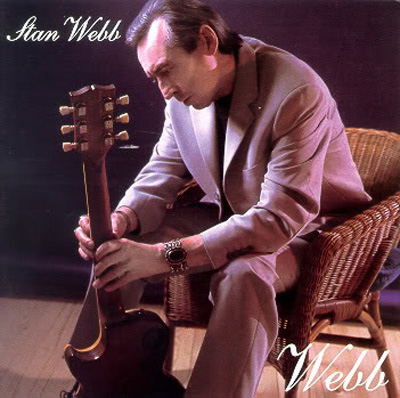
The ex-Chicken Shack lead guitarist was still at it more than 30 years after his commercial peak, with this 2001 set representing his first studio album in some time. If Webb was American, it would be easy to imagine him getting picked up by a subsidiary of the Rounder label, such as Bullseye Blues or Blacktop. He's got that same skilled, bar-band blues-with-a-touch-of-rock vibe. He still plays well, but (as it happens, like many a Bullseye Blues and Blacktop artist), his vocals lag way behind his guitar skills. It's capably executed, moody urban blues for the most part, with some brass provided by the Third Coast Horns. This is a step ahead of many similar journeyman blues albums in that most of the material is original (written by Webb with second guitarist Fred James), and in that Webb's vocals, while not very powerful, are more affable than those of many such performers. Given Webb's vocal limitations, it's unsurprising that the best track is the instrumental "Misty Rivers," where his sliding, sustaining guitar work is at its most echoed and spooky. As for the most oddball selection, it's certainly the one cover, ofthe Beatles' "She Loves You," which is given such a radical mid-tempo bar-band rearrangement that casual listeners might not even recognize the song. AMG.
Josh Homme is a man of many talents, but he's not quite a man of his time. He floats outside of it, sniping and sneering at it, but he's not part of it -- he's too in love with rock & roll to belong to a decade that's seeing the music's slow decline. You could say that Queens of the Stone Age keep rock's flame burning, but unlike other new-millennium true believers -- like Jack White, for instance -- Homme lacks pop skills or even the interest in crossing over (which isn't the same thing as lacking hooks, mind you), and unlike the stoner metal underground that provided his training ground, he's not insular; he thrives on grand visions and grander sound. He's an anomaly, a keeper of the flame that will never be played onLittle Steven's Rock & Roll Underground because Queens of the Stone Age are too heavy, too muso, too tasteless in all the wrong ways to be commonly accepted or embraced as among the next generation of rock heroes -- which only makes them more rock & roll, of course. And if rock & roll is indeed in decline in the 2000s, Homme and his Queens of the Stone Age prove that rock & roll can nevertheless be just as potent as it ever was with each of their remarkable albums. All are instantly identifiable as QOTSA but all are quite different from each other, from the sleazoid freak-out of R to the dark, gothic undertow ofLullabies to Paralyze, a record so willfully murky that it alienated a good portion of an audience ready to bolt in the wake of the departure of Homme's longtime partner, Nick Oliveri. Its 2007 successor, Era Vulgaris, is as different from Lullabies as that was to their dramatic widescreen breakthrough, Songs for the Deaf: it's mercilessly tight and precise, relentless in its momentum and cheerful in its maliciousness. Like other QOTSA albums, guest musicians are paraded in and out, but here it's impossible to tell if Mark Lanegan contributed anything or if that indeed is the Strokes' Julian Casablancas singing lead on the lethal "Sick, Sick, Sick," because Homme has honed Era Vulgaris so scrupulously that it's impossible to hear anybody else's imprint on the overall sound. QOTSA retain some of the spookiness of Lullabies -- there's a ghostly hue on "Into the Hollow" -- but this is as balls-out rock as Songs for the Deaf, only minus the mythic momentum Dave Grohl lent that record. But Era Vulgaris isn't designed as a monolith like Songs; its appeal is in its lean precision, how the riffs grind as if they were stripping screws of their threads, how the rhythms relentlessly pulse, and, of course, how it's all dressed up in all kinds of scalding guitars, all different sounds and tones, giving this menace and muscle. If the songs aren't pop crossovers -- not even the soulful seductive groove of "Make It Wit Chu" (revived from one of Homme's Desert Sessions) qualifies it as a potential pop hit -- they still have hard hooks that make these manifestos even if they aren't anthems: "Misfit Love" digs in like a nasty Urge Overkill, "Battery Acid" is metallic and mean, blind-sided only by the gargantuan, gnarly "3's & 7's." It's hard to call Era Vulgaris stripped-down -- there's too much color in the guitar, too much willful weirdness to be that -- but this is Queens of the Stone Age at their most elemental and efficient, never spending longer than necessary at each song, yet managing to make each of these three-minute blasts of fury sound like epics. It's exhilarating, the best rock & roll record yet released in 2007 -- and the year sure needed the dose of thunder that this album provides. AMG.
Now on his 14th release for approximately ten different labels, Texan Omar Dykes keeps the faith by re-recording some of his better tracks, and adding a few new covers. While it looks on paper to be treading water, this is really one of the band's strongest releases, since the material -- which has often been inconsistent -- is top-notch, and the new Howlers are a crack unit with impeccable chops. Omar attacks and rearranges these songs with the experience of having played them for years, in many cases making these versions more definitive than the originals, an unusual occurrence when an artist revisits his own work. Whether taking "Muddy Springs Road" down to the swamp and saturating the tune with greasy acoustic slide guitar or rescuing the slow blues of "Life Without You" from obscurity while singing it with crying emotional intensity, this makes a case for Dykes as one of the most talented and least recognized contemporary bluesmen. There are a few missteps; the band's plodding version of Mountain's "Mississippi Queen" adds nothing to the original, other than proving how much Omar's voice sounds like Leslie West's, and the Bob Seger-isms of the simplistic rock & roller "Caveman Rock" seem forced and stilted. But it's great to hear terrific older tracks like "Bad Seed" and "Wall of Pride" redone with restraint and class. Dykes is in fine voice throughout, growling and howling with raspy delight, a combination ofHowlin' Wolf and John Fogerty wading through the muddy southern river banks. Since as of 2002 there was no comprehensive, multi-label Omar collection available (and with the different imprints he recorded for, one does not seem likely), this fills the bill just fine as a greatest hits compilation. Those who want a taste of the deep, moody, growling blues-rock of Omar & the Howlers should start here. AMG.
Maceo Parker, best-known for his R&B recordings with and without James Brown, plays strictly jazz on his Novus CD and he is in peak form. Parker's alto sounds close to Hank Crawford at times but with a phrasing of his own. On this well-rounded and consistently memorable release, Parker sticks mostly to funky blues but is also impressive on a boppish version of "The Way You Look Tonight." He splits his time between fronting an organ combo, leading a reunion with fellow Brown alumni trombonist Fred Wesley and tenor-saxophonist Pee Wee Ellis, and on two songs he is joined by the enthuisastic Rebirth Brass Band. Parker only takes one vocal so the emphasis throughout is on his soulful alto, making this among his most rewarding jazz recordings. AMG.
Originally released on vinyl in the mid-'80s and reissued on CD in 1997, Watto Sitta finds kora masterFoday Musa Suso collaborating with Herbie Hancock, Aiyb Dieng, and Bill Laswell to produce an eclectic cross between Afropop and electronic dance music. AMG.
Although their roots were in punk rock, their debut album announced to the world that the Lords of the New Church were not your average punk band. They had ambitions: they would be the last beacon of truth in a world nearing its end. And while you can't call The Lords of the New Church entirely successful -- for every high point like "Open Your Eyes" or "Russian Roulette" there's a clunker like "Portobello" or "Eat Your Heart Out" -- you can't fault their effort. Guitarist Brian James and the Tregunna/Turner rhythm section provide a wide-screen setting, with guest musicians adding synths and horns to the guitar bass, and drums foundation. But the face, mouth, and heart of the Lords was Stiv Bators, who casts himself here in the role of rock & roll poet/preacher/prophet. He was no Bob Dylan, to be sure, but on The Lords of the New Church Bators demonstrates lyrical maturity surprising to anyone who ever heard Dead Boys songs like "I Need Lunch." Consider these few lines from "New Church," which may not be high art, but make their point and also serve as a neat summary of the Lords ethos: "Truth can't be found on the television/Throw away youth ya gotta take a stand/Music is your only weapon/Spanners in the works go start your gang...." Lords of the New Church is very much an artifact of the Reagan era and somewhat dated in its approach, but Bators' core message of personal freedom, and the fervor and sincerity with which he delivered it, have retained their resonance across the years. AMG.
So anachronistic is Joe Walsh that he not only celebrates how he's an "Analog Man in a digital world," he hires Jeff Lynne as his producer for his first solo album in 20 years. And, apart from the odd lyrical reference to an iPod or Walsh's ongoing recovery, Analog Mansounds like it could have come out in 1992 and that's all due to Lynne, a man who makes a record in one particular way: crisp, clean, hook-laden, and sequenced so tightly there's no room to breathe. With no apparently irony, it sounds digital, not analog -- there's nothing greasy, even the James Gang's "Funk #49" has been given an immaculate 21st Century Digital Makeover and is now called "Funk 50" -- but it's been so long since Walsh has worked with a conscientious producer (this may be his first time, actually), he winds up reaping some benefit from such a controlled setting. Analog Man isn't rock & roll, not by a long shot, but rather a gleaming pop album in the vein of Full Moon Fever, a sound that suits Walsh's new sobriety. Perhaps he hits his recovery theme a little too hard -- a criticism that could also be leveled toward his songs about being an old fart -- but he sounds comfortable where he is and Lynne presents him in a shining, flattering light. As comebacks go, he could do a lot worse than this. AMG.