sexta-feira, 28 de fevereiro de 2014

Dennis Jones - Pleasure & Pain 2009

Goofy album cover aside, Dennis Jones' 2009 album, Pleasure & Pain, is one rollickingly good time -- especially if you're a fanatic of groovy blues-rock. Possessing a voice that sounds very comparable to Doug Pinnick of King's X and guitar work modeled directly after Stevie Ray Vaughan (and judging from the album cover, looking much like a cowboy version of Dennis Rodman), Jones runs the blues gamut on Pleasure & Pain, with cases in point being such standouts as the album-opening "Brand New Day" (which contains snazzy, swing-like horns), "Kill the Pain" (which approaches Zeppelin-esque hard rock territory), and such Stevie Ray-like ditties as "Blue Over You" and "Hot Sauce." Pulling in elements of vintage and gritty blues-rock (without smoothing it over in the studio -- something that many modern-day blues-rockers are a tad guilty of), Dennis Jones gets it right more times than not throughout Pleasure & Pain.

listen here

Buy @ Amazon: USA - FR - UK

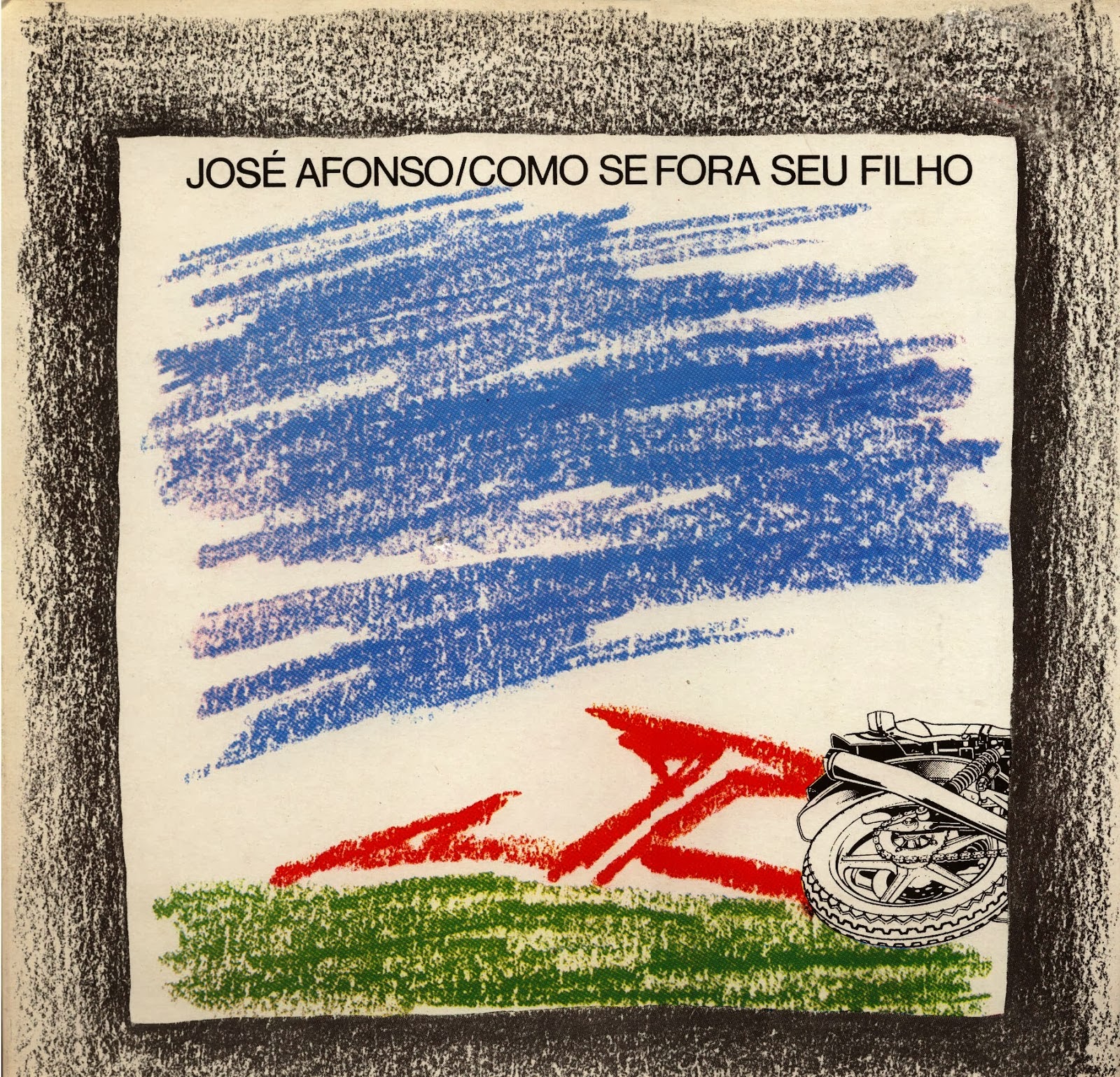
José Afonso - Como Se Fora Seu Filho 1983

José Manuel Cerqueira Afonso dos Santos, known as Zeca Afonso or just Zeca (2 August 1929 – 23 February 1987), was born in Aveiro, Portugal, the son of José Nepomuceno Afonso, a judge, and Maria das Dores. Zeca is among the most influential folk and political musicians in Portuguese history. He became an icon among Portuguese left-wing activists due to the role of his music in the resistance against the dictatorial regime of Oliveira Salazar, resistance that triumphed in 1974 with the pro-democratic leftist military coup of the Gillyflower Revolution. His song Grândola, Vila Morena is closely associated with the revolution. In the ensuing revolutionary process, Zeca was a very active musician and continued composing political and folk songs, often criticizing the post-revolutionary changes. Years after his death, Zeca Afonso is still widely listened to, not only in Portugal, but also abroad.

listen here

Buy @ Amazon: USA - FR - UK

Yo-Yo Ma, Edgar Meyer, Mark O'Connor - Appalachian Journey 2000

The follow-up album to the highly successful Appalachia Waltz collaboration, Appalachian Journey continues the combination of classical music with Appalachian, bluegrass, and American roots music in general. Yo-Yo Ma, alongside violinist Mark O'Connor and bass player Edgar Meyer, runs through a number of original compositions fusing the traditions, as well as a few old standards from the genre repertoire. As stated by the artists, Appalachia Waltz explored the combination of the three artists' sounds put together, while Journey expands upon this theme, exploring the sound of the three artists as a singular group. Joining with the trio are James Taylor on a pair of works (on both guitar and vocals) and Alison Krauss on fiddle and vocals. The vocalists are added specifically on a pair of old Stephen Foster works, the songs themselves thematically bridging the gap between the classical and folk realms. The tone can change easily from cheerful jigging to outright nostalgic, depending largely on who's doing the soloing at any given time. There's an embracing down-home atmosphere set up by the artists, using warm tones and motives throughout the album. At the same time, the trio displays some remarkable virtuosity (as would be expected from this group), burning through some fiery sets of triplets on otherwise slow instruments (the cello and bass, specifically), but keeping up with the violin while avoiding the easily hit distortion sounds that usually come from high speed, low frequency playing. Reels fit easily with waltzes here, and also with traditional songs with virtuosic passages from original compositions. The old and the older are easily made compatible here largely on the strength of the performers involved. It's a worthwhile album for listeners curious about the newer directions being taken in the classical realm. AMG.

listen here

Buy @ Amazon: USA - FR - UK

Mother Funk Conspiracy - The Mother Funk Conspiracy 2004

Delivering a unique blend of danceable funk and bebop jazz, the Mother Funk Conspiracy is a power force to be reckoned with. With roots ranging from James Brown to Charlie Parker and John Coltrane, MFC's high-energy, masterful playing, and thoughtful compositions attract a variety of music lovers, from the casual, "good times" dancer, to the keen, jazz conscious listener.

After forming in 1998, MFC teamed with Tower Of Power saxman Paul Perez to record a six song CD entitled Heavy Junk. The tracks quickly found a home at the top of MP3 's funk and jazz fusion charts and stayed there for several years thanks to MP3 's visitors. In January 2004 MFC signed with indie label Housekeeping Records and recorded the new CD The Mother Funk Conspiracy with L.A. alto sax playing shredder Zane Musa (26). The band also includes keyboardist Dennis Hamm (28), bassist Forrestt Williams (27), guitarist Doug Sikola (33), and drummer Jarred Pope (33).

Now touring in support of their new material and new disc, the Conspiracy is ready and willing. Have funk, will travel. With over 328,000 downloads from MP3 and a large, diverse fanbase, the MFC will bring it on.

"There's a density and a depth to the expression of Mother Funk Conspiracy. Whether it's an unexpected shift, a searing vibrato, or the sheer intensity of an arrival into a groove that has been tweaked with fresh insights, Mother Funk Conspiracy seems to always penetrate below the surface of its considerable virtuosity to discover and explore, to linger and caress, and always to dig a little deeper. The legacy of this unique group is the power and drive of funk and fusion, but they seem to be able to avoid the traps of empty expression and display. Maybe there is a conspiracy in this group's belief in the power of music's creative energy to transform and to transport us." -- Dr. Doug Davis, Professor of Jazz Studies, CSUB

listen here

Buy @ Amazon: USA - FR - UK

segunda-feira, 17 de fevereiro de 2014

David Hidalgo, Mato Nanji & Luther Dickinson - 3 Skulls And The Truth 2012

Luther Dickinson has been a busy man in 2012. This is the fourth recording he's either fronted or been a prime collaborator in during the calendar year. In May he released his own solo offering, Hambone's Meditations, a second offering with the South Memphis String Band, and Go On Now, You Can't Stay Here by his new band the Wanderingon the same day. 3 Skulls and the Truth, with Los LobosDavid Hidalgo and Indigenous founder and lead guitaristMato Nanji, will be the one that most appeals to the wild, raucous sounds of Dickinson's prime unit, the North Mississippi Allstars. These three lead guitar players, backed by the rhythm section of drummer Jeff Martin and bassist Steve Evans, lay down 12 raw blues-based rock tunes. Produced by Mike Varney3 Skulls and the Truth is a hot mess. The sound is raw nasty, loose, and loud; it seems to draw inspiration from the nasty boogie of the early '70s -- particularly the one evangelized by ZZ Top. The material from VarneyNanji, and Dickinson was all written for this date. The guitarists freely interact, strut their stuff, and keep things tight. This trio is made up of axe monsters; they understand roots rock as a dynamic -- not a revivalist -- force, where it meets the blues. The tunes are not merely jams; they're well-constructed songs with bridges, clever lyrics, and loads of six-string heat. Check the primitive blues stomp of "Have My Way with You," which opens the date. Dickinson's vocal blues moan, a stomping foot, and two guitars move back and forth before the band kicks in and the track becomes what might have been an outtake from Tres Hombres. "All I Know," with its swaggering roots boogie, is topped by soulful vocals by Nanji and Hidalgo, punctuated by two punchy guitars and underscored by Dickinson's slide. On "The Worldly and the Divine," blues, hard rock, and tripped-out Hendrixian psych seamlessly intertwine as the track nearly sprawls out of control. "The Truth Ain't What It Seems" charges out of the gate before winding itself in a labyrinth with a skittering set of funky breaks by Martin that somehow anchors the frontline riff and changes. There's a funky undertone that gets obliterated by the wailing exchange of fills by the principals. Likewise, closer "Natural Comb," a slow, churning blues, allows the guitarists not merely solos, but the ability to inform the tune's melody with all manner of fill and extensions. The humorous lyric keeps it all grounded. 3 Skulls and the Truth, which may be the rock party album of the year, proves that the blues and boogie are still very much alive as creative endeavors, and hopefully asserts that that this trio of slingers will team up again -- and soon. AMG.

listen here

Buy @ Amazon: USA - FR - UK

The Temper Trap - Conditions 2009

The Temper Trap attracted their first batch of fans with "Sweet Disposition," a pop anthem framed by the influence ofJeff Buckley's falsetto and U2's guitar delay. A similar sound fuels the rest of Conditions, which takes additional cues from the sweeping, atmospheric strains of Coldplay and Bends-era Radiohead. The music itself is partially responsible for such comparisons, but the most obvious link between The Temper Trap and the bands they so avidly adore is singer Dougy Mandagi, an impassioned tenor who coos, croons, and courts melodrama with all the open-armed enthusiasm of a theater student. He's a fantastic singer and fairly capable songwriter -- two essential qualities for a frontman who takes cues from the giants of stadium pop/rock -- but he's also a middling lyricist, concerned with topics that are far smaller than the cathedrals and sweeping landscapes his music evokes. For all its fist-pumping beauty, "Sweet Disposition" seems to be about little more than a late-night makeout session ("Stay there, 'cause I'm coming over"), and "Rest" features few words other than "Oooh, baby," which lose their luster after several repetitions.Conditions runs out of juice during its second half, where the anthems of side A give way to minor-key ballads and rock songs that only pack a medium-sized punch. Album highlights like "Sweet Disposition," "Love Lost," and "Fader" are tell-tale signs of a band worthy of scaling the Joshua Tree, though, even if The Temper Trap have some growing up to do beforehand. AMG.

listen here

Buy @ Amazon: USA - FR - UK

Dickey Betts - Night 1981

Dickey Betts joined the Allman Brothers Band as second lead guitarist and singer in the late '60s. In addition to matching bandleader Duane Allman lick for lick, Betts also wrote such memorable songs as "Revival" (number 92, 1971) and the instrumental tour de force "In Memory of Elizabeth Reed." AfterDuane Allman was killed in a road accident in 1971, Betts and Allman's brother Gregg shared leadership of the band, with Betts writing and singing the group's biggest hit, "Ramblin' Man" (number two, 1973). Members of the band began solo careers in 1973, and Betts released his first solo albumHighway Call, in 1974. The Allmans split up in 1976, and Betts formedDickey Betts and Great SouthernThe Allmans reformed in 1978, with Bettscontributing "Crazy Love" (number 29, 1979), "Angeline" (number 58, 1980), and "Straight From the Heart" (number 39, 1981). But they split again, and both Betts and The Allmans were inactive for several years. Betts returned with the Dickey Betts Band and Pattern Disruptive in 1988, and in 1989 he and a couple of members of his backup band joined a second, more permanent re-formation of The Allmans. AMG.

listen here

Buy @ Amazon: USA - FR - UK

Elza Soares - Do Cóccix Até O Pescoço 2002

Owner of a distinctive, harsh voice (even if considering the conspicuous Armstrong mannerisms), Elza Soares is one of the most swinging samba singers. Having appeared in 1959 with the samba "Se Acaso Você Chegasse," Soares always had her artistic career complicated by her personal life, which certainly impeded her of enjoying a more widespread popularity. Having gotten married at 12 and having lost three children who died of hunger, she later became the wife of Garrincha, one of the most genial soccer players ever, and also a chronic alcoholic. The peak of her career was in the '60s, with albums like O Máximo em Samba (1967), Elza Soares & Wilson das Neves (1968), Elza, Miltinho e Samba (a three-album series shared with Miltinho). In that decade she had several hits like "Boato," "Edmundo" (a version of "In the Mood"), "Beija-me," "Devagar Com a Louça," "Mulata Assanhada," "O Mundo Encantado de Monteiro Lobato," "Bahia de Todos os Deuses," "Palmas no Portão," and "Palhaçada." In the '70s, she still had success with "Salve a Mocidade" (1974), and "Malandro" (1977, this song launched Jorge Aragão as a composer). But it wasn't enough to prevent her from facing huge economical adversities and at the same time, she was being systematically turned away by recording companies. With Garrincha, Soares had a very troubled marriage and the untimely demise of their son Garrinchinha in 1986 in a car accident didn't help her in any way.
Trying unsuccessfully to develop a career abroad, she returned to Brazil in 1994, poor and depressed. Finally, she was rediscovered in the '80s by the younger generations of Brazilian rockers (Os Titãs, Lobão) and MPB artists like Caetano Veloso, having been awarded with a Sharp Prize award as the Best Samba Singer of 1997. Her life was depicted in the musical Crioula, which had several songs written specially for her by Chico Buarque, Chico César, Nei Lopes, and others. In 2000, she was appointed Singer of the Millennium by London's BBC. Soares continues to challenge her destiny, performing shows in every venue available. Living in extreme poverty throughout her childhood and teens, Elza Soares had her first audition in radio at Ary Barroso's novice show when she was 16, winning first place. She was then hired as a crooner by the Orquestra Garam de Bailes (led by conductor Joaquim Naegli). She worked in the orchestra until 1954, when she became pregnant. In 1955, she was invited to star together with Grande Otelo in the play Jour-Jou-Fru-Fru, which was a smash. Three years later, Soares toured Argentina, returning in the next year when she was hired by Rádio Vera Cruz. Also in 1959, she recorded a 78 rpm with "Se Acaso Você Chegasse" (Lupício Rodrigues/Felisberto Martins), one of her biggest hits. In 1960, she went to São Paulo where she performed regularly in the show I Festival Nacional de Bossa Nova and recorded her first LP, Se Acaso Você Chegasse. In 1962, she represented Brazil in Chile during the World Soccer Cup, where she met Garrincha. Having recorded several albums with the hits "Só Danço Samba" (Tom Jobim/Vinícius de Moraes), "A Banca do Distinto" (Billy Blanco), "Pressentimento" (Elton Medeiros/Hermínio Bello de Carvalho), and "Princesa Isabel" (Sérgio Ricardo), she moved to Italy in 1969, where she performed at the Sistina theater (Rome), returning to Brazil in 1972. In the same year, she opened the show Elza Em Dia de Graça at the Opinião theater (Rio) and participated in the Brasil Export Show (Canecão). Rediscovered in the '80s as a cult heroine by the Os Titãs, she performed with the band in a regular show at the Madame Satã nightclub. Soares also recorded in duet with Caetano Veloso on his album Velô and with Lobão on Casa de Samba. With her Trajetória (1997), in which she was paid tribute by Zeca Pagodinho, she won the Prêmio Sharp Award as Best Samba Singer. In November 1999, Soares participated in the show Desde Que o Samba é Samba (at Royal Albert Hall, London, England), together with Chico Buarque, Caetano Veloso, Gilberto Gil, Gal Costa, and Virgínia Rodrigues. In 2000, her life was depicted in the musical Crioula (Stella Miranda). AMG.

listen here

Buy @ Amazon: USA - FR - UK

The Subdudes - Flower Petals 2009

Led by singer/guitarist Tommy Malone and accordionist John Magniethe Subdudes draw most of their inspiration from the sounds of their native New Orleans, blending blues, gospel, funk, and R&B with their own harmony vocals; their sound is also notable for the band's substitution of a tambourine player for a drummer. The band came together after backing artists such asJoni Mitchell and Roseanne Cash, and released its eponymous debut in 1989. Like the group's subsequent albums (including 1991's Lucky, 1996'sPrimitive Streak, and 1997's Live at Last), The Subdudes featured a mix of covers and originals. After an eight-year sabbatical, the Subdudes joined Bob Dylan guitarist Freddy Koella to produce Miracle Mule in spring 2004. Keb' Mo' would be the producer for the band's 2006 effort, Behind the Levee, andStreet Symphony would follow in 2007. AMG.

listen here

Buy @ Amazon: USA - FR - UK

Col. Bruce Hampton & The Aquarium Rescue Unit - Mirrors of Embarassment 1993

Bruce Hampton, very late of the Hampton Grease Band, has learned to let it all stretch and flow, and, boy, does it flow. This sophomore set is a treat and a half, filled with jazzy grooves that get bluesy and then rocky, only to stand up and toss Bela Fleck out front for a banjo attack on "Too Many Guitars." It's relaxed, smart, fun music with big fat friendly shouter vocals from the Colonel. AMG.

listen here

Buy @ Amazon: USA - FR - UK

Sons Of Champlin - Hip Li'l Dreams 2005

While never major-league San Francisco hitters back in the day, the Sons of Champlin made some pleasantly soulful noises, and this return to the studio could make longtime fans drool. In many ways the music is what they always did, just a bit longer in the tooth and more sophisticated. Certainly the opener, "For Joy," gets off to a cracking start. Time has only sharpened their musical chops, and their sound is often as smooth as cream. Sometimes, however, that's a bit too much -- "Bring Home the Gold" ends up sounding unfortunately as if they're auditioning to be a Chicago tribute band, and "I'm Not Your Lover" could almost have come out of the '80s Cyndi Lauper ballad book. At times they try to make the rhythm sound programmed, to offer a contemporary edge, and the "Yo" at the beginning of "Star Outa' You" gives that very faint urban touch. But for the most part, other than the production gloss, this album could have stepped straight out of the 1970s, although whether that's a good thing or not depends on your point of view. "Swim" has Tal Morris' guitar flying all over the place, but for the most part it's Bill Champlin's voice and unobtrusive keyboard style that glues everything together. The vocal harmonies are so tight you couldn't slip a dime between them, and the songwriting is good, but not always inspired. But whether it will really appeal to anyone who's not already a long-term committed fan remains to be seen. AMG.

listen here

Buy @ Amazon: USA - FR - UK

Snatam Kaur Khalsa - Prem 2002

Prem translates as Love and this is the energy that is carrying you from the first moment on like a warm wave of joy. Prem was Snatam Kaur's first album and marked the beginning of her extraordinary carreer as a milestone of her outstanding talent.
Snatam Kaur's album Prem is carried by her warm and wonderful voice which fascinates lots of listeners worldwide and is the guiding light on all of her CD's. From the six tracks of this album, the title "Aadays Tisai Aadays" was initially played at the White Tantra Yoga course and at the European Yoga Festival an was offered for the first time in Europe through us. Within 24 hours, Prem became one of the best selling albums ever and remains so until today! Snatam Kaur's debut album is universal, as beautiful as a sweet dream, timeless and a brightly shining jewel of spiritual music.

listen here

Buy @ Amazon: USA - FR - UK

Robert Walter - Cure All 2008

Robert Walter has no problem getting into funky, down-home soul-jazz when he wants to, but the organist/keyboardist/pianist also has his intellectual side. He obviously appreciates the soul-jazz that B-3 icons likeJimmy SmithRichard "Groove" HolmesJohnny "Hammond" Smith, and Jack McDuff offered in the '60s, but he has also shown his appreciation of Medeski, Martin & Wood as well as the post-bop and fusion that Larry Young explored after he moved beyond soul-jazz. And both sides of Walter's artistry serve him well on Cure All. If Walter (who forms a trio with bassist James Singleton and drummer Johnny Vidacovich) set out to offer a healthy balance of intellect and funkiness, he achieves that goal on enjoyable tracks such as "Maple Plank," "Snakes and Spiders," "Measure Up," and "Coupe." Most of the material is more cerebral than a typical soul-jazz performance would be, but at the same time,Cure All is less cerebral than Medeski, Martin & Wood's albums. Whether he is on organ, acoustic piano, or electric keyboards, Walter usually avoids becoming either too simple or too abstract. Not that there is anything wrong with either simplicity or abstraction; the straightforward, groove-loving bluesiness of Big John Patton and Gene Harris is every bit as valid a part of jazz as the most challenging pieces that John Medeski has had to offer. But Walter obviously wanted to avoid going too far in either direction, and that outlook yields consistently worthwhile results on Cure All. AMG.

listen here

Buy @ Amazon: USA - FR - UK