terça-feira, 18 de dezembro de 2012

Marisa Monte – Verde, Azul, Amarelo, Cor-de-Rosa e Carvão 1994

Marisa Monte is one of the best figures of today's Brazilian pop (a category that does not comprise pure samba, choro, canção, baião, and other Brazilian popular musics). While most new bands and interpreters center their work on futile material and focus on easy formulas and clichés, she is concerned in really adding something to the superb tradition of MPB, which is quite a challenging task. This is her third album, where, with special guests Philip GlassLaurie AndersonGilberto GilPaulinho da Viola,Velha Guarda da PortelaÉpoca de OuroNaná VasconcelosCarlinhos Brown, and others, she delivers some of her hits: "Maria de Verdade," "Na Estrada," "Segue o Seco," "Dança da Solidão," "De Mais Ninguém," "Bem Leve," and "Balança Pema." One of the best pop albums from the '90s, she makes clear that she is after a new language in which the respect for the rich musical tradition of Brazil is evident. AMG.

listen here

Buy @ Amazon: USA - FR - UK

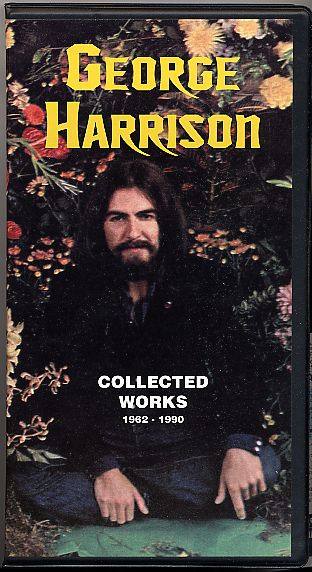
George Harrison - Collected Works 1962-1990 2002


In his most obvious contribution to music as lead guitarist for the Beatles, George Harrison provided the band with a lyrical style of playing in which every note mattered. Later on, as a songwriter with the Beatles and subsequently as a solo artist, Harrison used his celebrity and his musical sensibilities to try raising the awareness of millions of listeners about issues much bigger than music, especially the life of the spirit, and the living (and dying) situations of people in parts of the world that not a lot of Westerners usually thought about. And yet, for all of that, and a journey through life that took him to musical horizons he scarcely could have imagined at his start in Liverpool, Harrison was also one of the humblest of superstars -- in his last decade, he still preferred to describe himself as "just an old skiffle man."
George Harrison was one of millions of young Britons inspired to take up the guitar by British skiffle king Lonnie Donegan's recording of "Rock Island Line." But he had more dedication than most, and with the encouragement of a slightly older school friend, Paul McCartney, he advanced quickly in his command of the instrument. Harrison developed his technique painstakingly over several years, learning everything he could from the records of Carl Perkins, Duane Eddy, Chet Atkins, Buddy Holly, and Eddie Cochran. At 15, he was allowed to sit in with the Quarrymen, the Liverpool group founded by John Lennon of which McCartney was a member; by 16, he was a full-fledged member, and was playing lead guitar when they became the Beatles.
The Beatlemania years, from 1963 through 1966, were a mixed blessing for Harrison. The group's studio sound was characterized by very prominent rhythm guitar, and on many of the Beatles' early songs, his lead guitar was buried beneath the chiming chords of Lennon's instrument. Additionally, his aspirations as a songwriter were thwarted by the presence of Lennon and McCartney, both natural and prodigious composers whose output left little room for songs by anyone else.
Harrison was known as "the quiet Beatle" but "the reluctant Beatle" might have been more accurate, in some respects. He was the member least comfortable with the sheer masses of people that their music inspired to frenzied outbursts. He was also the one who was most concerned with pure musicianship -- one of his idols was the classical guitarist Andrés Segovia -- and knew that the quality of his playing was lost on those screaming concert audiences. It was a situation that he came to loathe.

Despite these problems, Harrison grew markedly as a musician during those years, even writing a handful of songs, including one near-classic, "If I Needed Someone." He also played a key role in popularizing the Rickenbacker 12-string electric guitar, which became a staple of American folk-rock, especially in the sound of the Byrds. And he made his first acquaintance with the sitar, an Indian instrument whose sound fascinated him. Harrison subsequently developed a friendship with sitar virtuoso Ravi Shankar that lasted for the rest of his life; and his fame as a Beatle, in turn, helped to transform Shankar into the most well-known Indian musician in the world. By 1966, Harrison was writing music for the sitar, starting with the exquisite "Love You To" from Revolver. This was also the period in which the band, to Harrison's relief, agreed to give up doing concerts, which had become futile attempts at performance.
In the wake of that decision, Harrison's playing and songwriting grew exponentially. His interest in the sitar yielded a pair of beautiful songs, "Within You, Without You" and "The Inner Light," that were effectively solo recordings. He also wrote some clever, very personal psychedelic-style songs. And he developed a personal friendship with blues virtuoso Eric Clapton, which would have a profound effect on both their careers -- additionally, Clapton fell in love with and later married Harrison's then-wife, Patricia Boyd Harrison, who was also the inspiration for several of the best-known songs of the period by either guitarist. And, growing out of his devotion to the sitar, Harrison also developed a smooth, elegant slide guitar technique that showed up on the group's last three albums. Finally, he contributed three classic songs to those albums: "While My Guitar Gently Weeps," "Here Comes the Sun," and "Something." The latter was also the first Harrison song to appear on the A-side of a Beatles single, and not only topped the charts, but was good enough to get widely covered, including a version by no less a figure than Frank Sinatra, who called it "the greatest love song of the last 50 years."

Although never a strong singer, Harrison's vocals were always distinctive, especially when placed in the right setting. For his first solo record following the group's 1970 breakup, All Things Must Pass, he collaborated with producer Phil Spector, whose so-called "Wall of Sound" technique adapted well to Harrison's voice. All Things Must Pass and the accompanying single "My Sweet Lord" had the distinction of being the first solo recordings by any of the former Beatles to top the charts. Unfortunately, Harrison was later sued by the publisher of the 1962 Chiffons hit "He's So Fine," which bore a striking resemblance to "My Sweet Lord" -- he lost the case, in what was deemed an instance of unintended plagiarism. The album, however, was extraordinary in any context, built around some highly personal, topical songs, and some phenomenal rockers, but much of it also steeped in spirituality. It posed as many questions for the serious listener to ponder as it offered exquisite melodies and stunning production for the casual listener to revel in. And it sold about as well as any Beatles album, an even more impressive feat as a two-record set (with a bonus record, the "Apple Jam" -- which, itself, was historically important as the sessions that spawned Eric Clapton's band Derek & the Dominos).
In 1971, he organized rock's first major charity event, The Concert for Bangladesh, staged at New York's Madison Square Garden to aid that famine-ravaged nation, which yielded both a movie and a triple album. Rather ironically, for the man once known as "the quiet Beatle," Harrison found himself at the center of the international news media. What's more, he was having a decidedly easier time than his former bandmates selling his music. John Lennon's personal and political evolution yielded records that were sometimes difficult for fans to embrace; Paul McCartney was selling lots of records but was also being attacked by critics and fans for the superficiality of his work. In the most towering irony imaginable, the reluctant Beatle became the beneficiary of most of the lingering good will attached to the group.

In 1974, he organized Dark Horse Records, which -- following the end of his contract with EMI in 1976 -- became the imprint on which all of his subsequent solo work was issued. His albums from the '70s into the '80s always had an audience, but -- except for Somewhere in England (1981), released in the wake of the murder of John Lennon -- none attracted too many listeners beyond the core of serious fans. And some of his best musicianship was not in evidence on his own albums, so much as on recordings by such Dark Horse artists as Splinter. During this same period, Harrison co-founded Handmade Films, which produced such hit movies as Monty Python's Life of Brian, Time Bandits, Withnail and I, and Lock, Stock and Two Smoking Barrels.

In 1987, he released Cloud Nine, which featured his most inspired work in years, most notably a cover of an old Rudy Clark gospel number called "Got My Mind Set on You," which reached number one on the U.S. charts. A year later, with Bob Dylan, Tom Petty, Jeff Lynne, and Roy Orbison, he formed the Traveling Wilburys, who released two very successful pop/rock albums. All of this activity heralded his short-lived re-emergence from private life, resulting in a 1991 tour of Japan that yielded the album Live in Japan with his longtime friend Eric Clapton.
He withdrew from the public after that, devoting himself to his life with his second wife and their son. In 2000, he began work on remastering and expanding his classic All Things Must Pass album, in what was to be the first in a series of archival explorations of his post-Beatles career. Harrison had been treated for throat cancer in the late '90s, but in 2001 it was revealed that he was suffering from an inoperable form of brain cancer. At the time of his death on November 29, 2001, The Concert for Bangladesh album had been announced for upgraded reissue in January of 2002, and a DVD of the film was in release internationally. In the years since, his Dark Horse solo catalog has been re-released, as has the Traveling Wilburys library. Martin Scorsese produced an epic documentary on Harrison's life, George Harrison: Living in the Material World, which premiered in the fall of 2011. AMG.

listen here

Buy @ Amazon: USA - FR - UK

Céu - Vagarosa 2009

Céu's second album, arriving four years after her debut, finds her sticking to the style that brought her to the attention of the world music and hipster-lounge communities. She's still mixing the relaxed grooves of her native Brazil with those of downtempo/trip-hop acts like Thievery Corporation; still throwing in surprisingly capable reggae grooves "("Cangote," the first full song on this CD, boasts a deep dub bassline and some extremely haunting organ); and still multi-tracking her vocals into a conversation. It's a lilting yet heady blend that she pulls off with an utter confidence that's fascinating in such a young artist. Brazilian music has an innate lightness that Céu engages with on basically a molecular level. Her songs flirt with a Tom Waits-like clatter sometimes, but always resolve themselves into drifting bliss. Her psychedelic take on Jorge Ben's "Rosa Menina Rosa," the only song on Vagarosa she didn't write, works itself into a whirling storm of reverb and phasing effects, yet never loses its essential breeziness even as the throbbing bassline heads nearly into "Journey to the Center of the Mind" territory. Computer-generated vinyl crackle turns up on the album intro, as well as "Somnambulão" ("Sleepwalking"), the most ordinary song on the album and one which almost lives up to its title, though some dubwise melodica livens things up. The last track, "Espaçonave," throws in field recordings of rain forest creatures and multi-tracked vocals alongside fuzzed-out guitar, creating a feel reminiscent of the work of similarly brilliant Mexican art-pop princess Natalia Lafourcade. This is an extremely impressive, assured album well worth a listener's time, whether one speaks Portuguese or not. AMG.

listen here

Buy @ Amazon: USA - FR - UK

Terry Kath - Chicago Presents The Innovative Guitar Of Terry Kath 1997

To many, the late Terry Kath (guitar/vocals) was the heart and soul of Chicago. This is especially true of his contributions to the band's early blend of jazz with amped-up unadulterated wailing guitar rock. Sadly, Kath's tenure with the group was cut tragically short when, in late January of 1978, he accidentally and fatally shot himself. In hindsight, the band never fully recovered from the loss, and it would take four years before Chicago would creatively and critically reinvent itself on Chicago 16 (1982).The Innovative Guitar of Terry Kath (1997) includes 14 seminal selections and examples of the string man at the peak of his prowess. While there are no previously unissued songs, this compilation scans the nine Chicago studio long-players that Kath performed on as well the incendiary readings of "25 or 6 to 4" and "Mississippi Delta City Blues" from the must-own Live in Japan 1972 concert set. The track list is rather heavily represented, and rightfully so, by the first three Chicago titles -- Chicago Transit Authority(1969) , Chicago II (1970), and Chicago III (1971). Among them are the fully improvised "Free Form Guitar," "Listen," "An Hour in the Shower," and "South California Purples." Chronologically, later offerings include "Dialogue, Pts. 1-2" from Chicago V (1972) and "Darlin' Dear" off of Chicago VI (1973). Although the follow-up Chicago VII (1974) is glossed over, "Ain't It Blue?" ably represents Chicago VIII(1975) and both the soulful "Scrapbook" and the Memphis-style R&B rave-up on "Once or Twice" are taken from Chicago X (1976). (Note that 1975's Chicago IX was the band's first "best-of" and contained no new songs.) Kath's final effort was Chicago XI (1978); there is nothing featured from that album, although it is represented via the previously mentioned version of "Mississippi Delta City Blues" from Live in Japan 1972. While hardcore enthusiasts will inevitably have all of these selections, the real audience for The Innovative Guitar of Terry Kath is the uninitiated and burgeoning listener who is well-served by the broad range of the selected materials. AMG.

listen here

Buy @ Amazon: USA - FR - UK

Maria Rita - Elo 2011

Maria Rita quickly became a huge critical and popular success in Brazil (being Elis Regina's daughter certainly didn't hurt), but after releasing three albums and two DVDs in less than six years, she probably felt it was time for a break. By 2011, however, she was under mounting pressure from fans and her recording company to record a successor to 2007's Samba Meu. Cue the stopgap album Elo, made of songs Maria Rita had been performing during the first decade of her career, but which have never made it to her albums (the only previously released track is "Coração em Desalinho," featured on a popular TV soap opera.) For this record, Maria Rita re-creates the intimate setting of her appearances at Sao Paolo's Tom Jazz club in 2010, as she is joined only by the trio of pianist Tiago Costa, bassist Sylvinho Mazzuca, and drummer Cuca Teixeira. In this respect, Elo is much closer to the singer's first two records of acoustic jazz, bossa, and vocals, rather than the more expansive Samba Meu. To put it succinctly, this is a Brazilian nightclub chanteuse album in which Maria Rita offers her take on well-known songs by the likes of DjavanChico BuarqueCaetano Veloso, and Rita Lee. The general response in Brazil was more sympathetic than enthusiastic, for the following reasons: first, since some of Brazil's greatest singers have already recorded these songs, Maria Rita was inviting direct comparison with the canonical versions (often a battle that simply cannot be won), and secondly, albums by Brazilian female singers are usually judged almost as concept albums by virtue of their choice of repertoire and general intent. Compared to her previous work, Elo lacks the weight of an artistic statement. Maria Rita remains of course a class act, and this album is superbly played and sung, but it is more pleasing than revelatory. Fans of the artist, however, will find here many an insight into the different sides of Maria Rita's artistic persona, and are also rewarded with the inclusion of three songs that had not been previously recorded by any other artist: "Pra Matar Meu Coração" (Daniel Jobim & Pedro Baby), "Coração a Batucar" (Davi Moraes & Alvinho Lancellotti), and "Perfeitamente" (Fred Martins & Francisco Bosco). AMG.

listen here

Buy @ Amazon: USA - FR - UK

sexta-feira, 14 de dezembro de 2012

Hindu Love Gods - Hindu Love Gods - 1990

Hindu Love Gods formed in Athens, GA in 1984, a virtual cult-hero supergroup originally comprising guitarist Peter Buck, bassist Mike Mills, and drummer Bill Berry (all three of then-underground iconsR.E.M.), pianist Warren Zevon (the famously sardonic singer/composer best known for the classic "Werewolves of London"), and vocalist Bryan Cook (a veteran of local favorites Time Toy and Oh-OK). Their first single, "Narrator," arrived on the IRS label in mid-1985, getting lost in the hubbub surrounding the concurrent release ofR.E.M.'s third LP Fables of the Reconstruction. A year later, Buck,Mills, and Berry rejoined Zevon to collaborate on his Sentimental Hygiene solo effort; minus Cook, the foursome recorded a full-length Hindu Love Gods LP over the course of a single drunken after-hours studio session (Bill Berry: "It took us about as long to do as it takes to listen to"), with Zevon assuming vocal duties for a series of loose-knit electric blues covers capped off by a reading of Prince's "Raspberry Beret." The session remained an underground legend until it was finally issued on the Giant label in 1990; no other Hindu Love Gods recordings were forthcoming. AMG.

listen here

Buy @ Amazon: USA - FR - UK

CéU - CéU 2005

CéU's debut album -- originally released by Urban Jungle Records in Brazil in 2005 and reissued two years later in the U.S. by Six Degrees in conjunction with Starbucks -- is a lush blend of African-rooted North and South American music styles (MPB, samba, soul, jazz, Afrobeat, reggae) with cutting-edge contemporary production techniques. The radiant São Paulo vocalist is no doubt the star of this show, as she writes her own songs as well as sings them. The formative span of time she spent in New York City, where she found a rich array of influences, from classic jazz (Billie Holiday) and contemporary soul (Lauryn Hill) to hip-hop and electronica, greatly inform her music here. From song to song, CéU sings in a number of respective fashions, often channeling her influences. Her reverent cover of "Concrete Jungle" is the most overt instance of this, as she channels the spirit of Bob Marley for three-and-a-half minutes and does so quite convincingly. So while CéU may be the star of the show here, with her clear talent and varied wardrobe of influences, producer Beto Villares is the X-factor. He produces all but one of the 15 songs ("Ave Cruz" is the fine work of Antoñio Pinto), and he brings the songs to life in such a way that their blend of traditional music styles is melded tastefully, if not downright perfectly, with present-day advances in technology. He ensures that every song here has a prominent rhythm, even if it's a gentle soul groove or a jazzy lilt, even if that means he has to play the bassline himself (and in some cases he does, according to the revealing track-by-track credits). Practically every song features real percussion and bass playing (i.e., no programming, except on "Roda" and "Ave Cruz" -- each outstanding), as well as frequent acoustic guitar, all of which gives the album an organic earthiness that most so-called worldbeat albums lack, not to mention the productions of globally appropriating downtempo electronica acts like Thievery Corporation. Yet at the same time, Villares makes frequent use of studio effects, multi-tracking especially, and moves the percussion and bass to the forefront of the mix, and he also incorporates the turntablism of DJ Marco on most tracks. So even if the music of CéU is earthy and, for the most part, actually hand-played rather than programmed, it's just as contemporary in technique and style as that of Thievery Corporation, to again reference one of the most impressive concurrent downtempo electronica acts. CéU consequently fits in well with fellow cutting-edge female Brazilian artists such as CibelleBebel Gilberto, and Marisa Monte who straddle classic as well as contemporary styles of music, and while each of these women is thankfully unique in her own wonderful way, they as a group represent what seems to be a growing, forward-looking Brazilian music movement whose appeal is increasingly global in its reach. This CD was nominated for a Grammy award in 2007 for Best Contemporary World Music Album. AMG.

listen here

Buy @ Amazon: USA - FR - UK

Al Kooper - White Chocolate 2008

Coming just three years after Black Coffee, his first solo studio album of new material in three decades,White Chocolate (what's next, "Green Tea"?) is quite possibly the most satisfying solo release of this veteran's 50-year career. The title is the giveaway: Kooper has always championed classic soul music above all else, but now he's graduated from paying homage to his heroes of the '60s and '70s to absorbing their essence and personifying the music's most attractive qualities himself -- maybe this release falls short of equaling the best of Stax, Hi, or Philadelphia International (Kooper would no doubt admit to that), but not by much.
Kooper has always made his best music when he holds the reins and here he not only self-produced and arranged, and of course sang the lead vocals, on some tracks he also played every instrument -- whileKooper's skills as a keyboardist are well established and his guitar work long underrated, he also puts down mandolin, percussion, string sounds, and more. Of course he did have help: several brass teams (including the Uptown Horns) and a vocal trio (including the great Catherine Russell) provide ace support. Various additional guitarists, bassists, and drummers flesh out the tracks but the focus never strays from Kooper himself. For starters, if he's ever enjoyed making a record this much before, you wouldn't know it: Kooper seems so at home here (and not just because most of the album was recorded at his Somerville, MA. home studio). His voice, at 65, has naturally weathered, but he can still hit the notes he needs to hit and never tries to sound like the brash twenty-something kid who recorded Super Session or Child Is Father to the Man. Yet despite the maturity of the music, there's an oversized quality to this recording and a set of instantly memorable melodies and hooks that make it Kooper's most blatantly radio-friendly album in years -- that is, if radio was anything close to what it was in 1968. Hear these songs a couple of times and you will swear you've known them all your life.
But all of this is not to suggest this is a retro affair -- White Chocolate is exactly where Al Kooper should be right now. That's made clear from the first notes of opener "Love Time," as pure a slice of Southern soul/pop as the early 21st century can hope to produce. As the record unfolds, it becomes clearer that the lead track is no fluke: "I Love You More Than Words Can Say," penned by Booker T. Jones and Eddie Floyd back in the day, boasts some seriously funky chops and a tough guitar solo by Bob "Dyno" Doezema. A new take on Bob Dylan's "It Takes a Lot to Laugh (It Takes a Train to Cry)," which Kooperand Michael Bloomfield cut on the classic Super Session album 40 years previously, is presented here as a rolling, brassy, souled-up shuffle. And Kooper had to love cutting his song "Staxability," a tribute to the legendary Stax Records of Memphis, with no less than Steve Cropper on guitar and Donald "Duck" Dunnof Booker T. & the MG's on bass. Kooper gets to shout "Play it, Steve!," a line familiar to any fan of vintage soul, and actually gets to hear Cropper do just what he's asked.
In addition to his blue-eyed-soul pedigree, Kooper has always possessed a sharp sense of pop songcraft (he wrote "This Diamond Ring," the huge hit for Gary Lewis & the Playboys), and the chance to co-write two tunes for the album with Gerry Goffin (as in Goffin & King) had to be another dream come true for him. Those two are among the album's highlights: the smooth "You Make Me Feel So Good (All Over)" may not have more than a simple message to offer, but sometimes that's all that's needed to make the connection. And "No 1 2 Call Me Baby," with its phalanx of layered instruments and vocals, is almostSpectorian in its grandness. Other key tracks include the semi-autobiographical "Cast the First Stone," a statement on the politics of our times (of all times?) and how we all fit into those games; a gutsy, bluesy cover of Fred Neil's "Candy Man" (made famous by Roy Orbison); Kooper's interpretation of the Leiber & Stoller/Ben E. King perennial "I (Who Have Nothing)"; the set-closing, gospel-fied "(I Don't Know When But) I Know That I'll Be There Soon" (complete with Farfisa organ and accordion); and "Hold On," a tune of hope and self-determination that offers vocal thrills a-plenty when the powerhouse Russell takes lead on a verse and Kooper counters in his finest falsetto. White Chocolate can serve as a primer for Social Security-age rockers who still think the spandex fits. News flash: it doesn't. AMG.

updated listen here

Buy @ Amazon: USA - FR - UK

domingo, 11 de novembro de 2012

Girls - Father, Son, Holy Ghost 2011

Girls' second full-length sees indie rock songwriter Christopher Owens and his multi-instrumental sidekick Chet "JR" White getting better acquainted with the studio and growing more indulgent. All too often, artists follow up a breakout debut with a difficult sophomore outing, and Girls fall prey to the syndrome, overcompensating for average songs with dazzling instrumentation. It’s probable that after recording a straight-ahead EP, they wanted to show off their range, and as a sprawling, 54-minute epic,Father, Son, Holy Ghost is decidedly vast, but it also goes completely over the top. “Alex,” “Saying I Love You,” and “Forgiveness” fit with the ‘50s/Americana vibe of the Broken Dreams Club set. “Die” sounds like a stoner rock version of Deep Purple's "Highway Star" before it gives way into a Pink Floyd outro. The dreamy organ ballads “My Ma” and “Vomit” take the Floyd craftsmanship to the next level with a questionable addition of soul singers. Elsewhere, flamenco guitar, Mellotron arrangements, and sweeping guitar harmonies shape simple Merseybeat and soft rock templates into majestic psych-prog-tinged rock numbers. If there is a unifying theme, it’s that many of the songs start slow and escalate into overblown jams, with extra session musicians filling the gaps. As a duo, Girls felt comfortable like an old, weathered T-shirt, and now they feel like a well-pressed dress shirt with extra starch. The good news is that this album proves they are top-level purveyors of pop. The bad is that the eccentricity that once flowed freely feels forced. AMG.

link removed

Buy @ Amazon: USA - FR - UK